My front digipak panel:
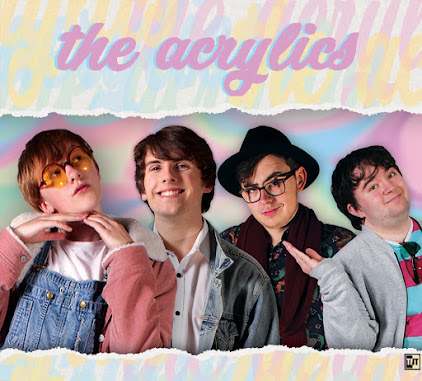
Right-click the image and open it in a new tab for a bigger version.
My inside digipak panels:
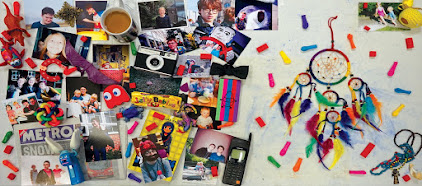
Right-click the image and open it in a new tab for a bigger version.
My back digipak panel (with album spine:)
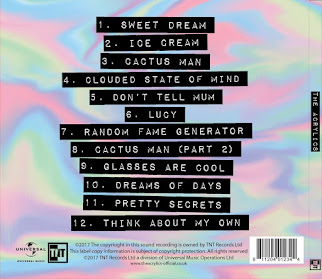
Right-click the image and open it in a new tab for a bigger version.
Click the image below to open my website in a new tab:

Showing posts with label AS Homework. Show all posts
Showing posts with label AS Homework. Show all posts
Thursday, 15 September 2016

HW 3b - Existing Film Continuity Sequence Analysis (BLK)
A clip from 'Pirates of the Caribbean: On Stranger Tides.' Click to play.
This clip creates and maintains continuity in a few ways. One key way it does this is use of the 180 degree rule- the line of vision between the two characters who are most involved in the conversation (Blackbeard and Captain Jack Sparrow) is never crossed by a camera, even when one of them turns his back to the camera. In fact, the only times the rule is ever 'broken' is between scenes, i.e. at the beginning of the clip the camera is on one side of the cameras, without breaking the 180 degree rule, and then when the pistols are introduced after a jump cut the camera has a new line of vision and thus a new 180 degrees to follow, foregoing the old one. This happens only a few minor times in the clip, in the sequence already mentioned and in the last moments of the clip when the Quartermaster walks away from the group and when Sparrow jumps over the cliff, however both scenes are far removed enough from the main conversation that it doesn't feel like the rule is really broken.
Another rule that the camera follows is the 30 degree rule. The only jump cut in the clip is used to signify the passage of time as the pistols are brought out, and even with the camera moving all around the forest clearing it stays angled within a 30 degree radius and thus manages to preserve continuity and make the whole scene flow, despite the changing focus between characters. This is complimented by the use of Shot/Reverse/Shot, which is seen when the camera is behind Blackbeard's shoulder when he is interacting with another character, but behind the other character's shoulder (or at least next to them) when they are interacting with him. This gives the impression of a dialogue and improves flow between the characters. Another feature of SRS is a master shot to establish the scene- the master shot for this scene, just before the camera starts doing the aforementioned over-the-shoulder shots, is when the pistols come out- the camera starts on a close-up and zooms out, revealing all the important characters and where they are in relation to each other. This spatial awareness really improves the effect of SRS when creating the dialogue.
Match-on action and soundbridges are used in this clip to preserve continuity also, often hand-in-hand. A good example would be when Sparrow picks up one of the guns; half-way through the motion of lifting it the angle changes, but he keeps moving seamlessly between the shots and the sound of the gun clicking as he grabs and moves it bridges the shots too. Another time this happens is when the doll is thrown off the cliff- the Quartermaster throws it in a long-shot, but then the perspective changes to a low-angle very-long-shot looking up at him, so that the doll falls 'through' the camera. When this fairly drastic camera shift happens, we see the Quartermaster's hand still raised from the throw in the previous shot, and the doll's arc flows quite nicely between the shots, avoiding looking jumpy and preserving continuity. A nice bonus is that Sparrow starts screaming off-camera as the doll falls, and the very next shot the camera cuts to him screaming on-camera with the sound bridging the shots.
In this same scene another continuity technique is used- a correct shot order. To preserve continuity, shots shouldn't go from close-up to long or vice versa as this looks jumpy, and this clip follows this guide. In the doll scene, this order is followed in a more dynamic way, as since the doll falls from up high down 'through' the camera, the focus effectively goes from long to mid to close without the camera moving, and the next shot of Sparrow screaming is also a close-up. Thus, despite the doll shot being framed as long and wide, due to the movement of the doll when it cuts to Sparrow it doesn't look unnatural. Finally, a few small details are followed through the whole clip to improve continuity. One is that all the characters have an eye-line match, and always appear to be looking in other character's eyes even when they are off camera and despite height differences. Another is that props and costumes stay consistent, as in the scene where Sparrow fires a gun into the air, which is immediately followed by a mid-close-up which obscures the hand holding the gun. Then, we see his hand again, not holding the gun, but it's actually all ok as during the shot the audience can hear the sound of something hitting the ground, which is an ellipse (i.e. something the audience naturally fill in for themselves) of him dropping the gun.
Another rule that the camera follows is the 30 degree rule. The only jump cut in the clip is used to signify the passage of time as the pistols are brought out, and even with the camera moving all around the forest clearing it stays angled within a 30 degree radius and thus manages to preserve continuity and make the whole scene flow, despite the changing focus between characters. This is complimented by the use of Shot/Reverse/Shot, which is seen when the camera is behind Blackbeard's shoulder when he is interacting with another character, but behind the other character's shoulder (or at least next to them) when they are interacting with him. This gives the impression of a dialogue and improves flow between the characters. Another feature of SRS is a master shot to establish the scene- the master shot for this scene, just before the camera starts doing the aforementioned over-the-shoulder shots, is when the pistols come out- the camera starts on a close-up and zooms out, revealing all the important characters and where they are in relation to each other. This spatial awareness really improves the effect of SRS when creating the dialogue.
Match-on action and soundbridges are used in this clip to preserve continuity also, often hand-in-hand. A good example would be when Sparrow picks up one of the guns; half-way through the motion of lifting it the angle changes, but he keeps moving seamlessly between the shots and the sound of the gun clicking as he grabs and moves it bridges the shots too. Another time this happens is when the doll is thrown off the cliff- the Quartermaster throws it in a long-shot, but then the perspective changes to a low-angle very-long-shot looking up at him, so that the doll falls 'through' the camera. When this fairly drastic camera shift happens, we see the Quartermaster's hand still raised from the throw in the previous shot, and the doll's arc flows quite nicely between the shots, avoiding looking jumpy and preserving continuity. A nice bonus is that Sparrow starts screaming off-camera as the doll falls, and the very next shot the camera cuts to him screaming on-camera with the sound bridging the shots.
In this same scene another continuity technique is used- a correct shot order. To preserve continuity, shots shouldn't go from close-up to long or vice versa as this looks jumpy, and this clip follows this guide. In the doll scene, this order is followed in a more dynamic way, as since the doll falls from up high down 'through' the camera, the focus effectively goes from long to mid to close without the camera moving, and the next shot of Sparrow screaming is also a close-up. Thus, despite the doll shot being framed as long and wide, due to the movement of the doll when it cuts to Sparrow it doesn't look unnatural. Finally, a few small details are followed through the whole clip to improve continuity. One is that all the characters have an eye-line match, and always appear to be looking in other character's eyes even when they are off camera and despite height differences. Another is that props and costumes stay consistent, as in the scene where Sparrow fires a gun into the air, which is immediately followed by a mid-close-up which obscures the hand holding the gun. Then, we see his hand again, not holding the gun, but it's actually all ok as during the shot the audience can hear the sound of something hitting the ground, which is an ellipse (i.e. something the audience naturally fill in for themselves) of him dropping the gun.
HW 3a - Continuity Task Evaluation (BLK)
Our short 'film clip,' themed around an accident and focusing on continuity. Click to play.
1) What is the story of the video?
In the video, two students walk around the same corner from opposite sides, and because they are both paying attention to different things rather than where they are walking, they walk right into each other, apologising profusely afterwards. One student is on his phone, the other is looking through a pile of school stuff.
2) How is continuity/narrative flow being attempted?
Narrative flow is attempted in quite a few ways. The most obvious way is utilising the in-camera editing to make the shots appear continuous- each shot contains an event that carries on from the last (or in some cases during the same time-frame as the last,) for example when the focus switches to another character the original character continues their movement realistically, as seen when they come back into view. The actual act of walking had close attention paid to it, as the actors attempt to land on and continue from the same foot between shots, and walk at a realistic and regular speed, i.e. a form of match-on action. The 180 Degree Rule is also obeyed, with one character moving from right to left and the other from left to right throughout the whole segment, with the walls serving as an anchor point and a master shot to reveal this.
3) Is full continuity achieved? If not, what/where are the mistakes?
Unfortunately, full continuity is not achieved, and the clip contains multiple problems and mistakes not limited to just continuity. One major contributing factor to the faults in narrative flow is the inherent problems with the medium of in-camera editing; it is hard to iron out mistakes between shots as you cannot re-film without deleting all shots chronologically after the re-filmed shot, and it is harder to be precise when stopping and starting, so run-on and run-off filming cannot be eliminated. However, still more problems were caused by the filmmakers. For example, the shot order is quite jarring in reference to framing- a mid-shot jumps to a wide long-shot very quickly. Shot/reverse/shot was not followed either, and thus it is possible to note slight differences between shots, such as a characters moving back a few steps between shots, and slowing down randomly so as not to move too far and put the next shot in jeopardy. Additionally, one actor (in fact myself) looks at the camera right at the end.
4) In hindsight, what could have been done differently to improve narrative flow and tell the story more effectively?
If shot/reverse/shot would have been used, everything would flow much better due to removing the need for the actors to try and be in the perfect position during and between shots. However, this would also require manual editing, and with access to that the current set of shots would also be greatly improved, as shots that linger too long or even start too late can be cut down, and some continuity mistakes such as actors slowing down or moving around between shots could be cut also. Planning more thoroughly and allocating more time would also have improved things greatly- as it was there were no documents produced before hand such as storyboards and the like, and everything was done on the fly due to the time constraint of 20-30 minutes.
HW 2c - Sound in Film Openings (DYM)
The opening to the 1995 film 'Toy Story.' I will be analysing how sound has been used. Click to play.
Dialogue
Dialogue in this opening is quite interesting, as it is actually a monologue posing as dialogue- the main character, the young boy, is creating personas for each of his toys, including voices, and having them interact with each other. Thus this creates the illusion of dialogue, as for all intents and purposes it is dialogue, however the viewer knows better and most likely finds the scene quite funny because of it, conveying the humour of the film in the first few seconds and divulging the genre. The audience also gets somewhat of an idea of the plot, as they can fairly safely presume that the toys are going to be characters (the title already hinted at this) and have their own personalities as dictated by the boy's monologue.
Sound Effects
The main sounds effects are the toys and their props moving around, including the bumping of their feet, the jingling of some coins, and a comedic "eye-pop" effect. This helps to show the importance of the toys and avoid any outside distraction. The most notable sound effect is Sheriff Woody's string-pull voiceline- it could almost be considered dialogue, however I am putting it here as it was involuntary and pre-recorded and initiated by the boy. Despite not clearly knowing whether or not the toys will speak on their own at this point (which, as someone with prior knowledge of the film, does happen,) one toy character already has a voice, despite it being mingled in with the sound effects of the story the boy is playing out. The other noticeable sound effects in the opening are the everyday sounds of the objects interacted with once the story leaves the bedroom- this helps to set the mood and scene as one of an average but happy home life.
Music Track
There are three pieces of music in this opening. They are all non-diegetic, which is notable as so far every single piece of audio has been diegetic. The first is an atmospheric villain theme, intended to play along with the villanous first character and set the mood for one of suspense. The second piece is a natural follow-up to the first- a slightly western action theme, used to transition from the bad early events to the action-packed rescue as the character Woody comes onto the screen. The final piece, and the only non-instrumental, begins to play as Woody and the boy finish playing and leave the bedroom, as serves as the backing track for the aforementioned average home life. The lyrics work with the visuals as they are about friendship, something which the two characters obviously share.
Dialogue in this opening is quite interesting, as it is actually a monologue posing as dialogue- the main character, the young boy, is creating personas for each of his toys, including voices, and having them interact with each other. Thus this creates the illusion of dialogue, as for all intents and purposes it is dialogue, however the viewer knows better and most likely finds the scene quite funny because of it, conveying the humour of the film in the first few seconds and divulging the genre. The audience also gets somewhat of an idea of the plot, as they can fairly safely presume that the toys are going to be characters (the title already hinted at this) and have their own personalities as dictated by the boy's monologue.
Sound Effects
The main sounds effects are the toys and their props moving around, including the bumping of their feet, the jingling of some coins, and a comedic "eye-pop" effect. This helps to show the importance of the toys and avoid any outside distraction. The most notable sound effect is Sheriff Woody's string-pull voiceline- it could almost be considered dialogue, however I am putting it here as it was involuntary and pre-recorded and initiated by the boy. Despite not clearly knowing whether or not the toys will speak on their own at this point (which, as someone with prior knowledge of the film, does happen,) one toy character already has a voice, despite it being mingled in with the sound effects of the story the boy is playing out. The other noticeable sound effects in the opening are the everyday sounds of the objects interacted with once the story leaves the bedroom- this helps to set the mood and scene as one of an average but happy home life.
Music Track
There are three pieces of music in this opening. They are all non-diegetic, which is notable as so far every single piece of audio has been diegetic. The first is an atmospheric villain theme, intended to play along with the villanous first character and set the mood for one of suspense. The second piece is a natural follow-up to the first- a slightly western action theme, used to transition from the bad early events to the action-packed rescue as the character Woody comes onto the screen. The final piece, and the only non-instrumental, begins to play as Woody and the boy finish playing and leave the bedroom, as serves as the backing track for the aforementioned average home life. The lyrics work with the visuals as they are about friendship, something which the two characters obviously share.
HW 2b - Analysis of Titles in Film Openings (DYM)
Chosen Films
The opening credits to the 2012 James Bond film 'Skyfall.' Click to play.
The first title we see is the name of the production company- this transitions to the name of the star actor, and the title of the film. From there, we get the rundown of the rest of the actors of the film, before being shown the co-producers. Then there is a lengthy segment showing blocks of people on the film team- following this is more members of the film team who are important enough to be shown alone, such as the costume designer and musicians. Finally, the producers and writers are shown, and the sequence ends on the name of the director.
The titles are mainly placed where there is space. Generally this is out of the way of characters and/or in an area with basically just one colour, often a corner, so that the text stands out, with the exception of the first few titles, up to the name of the film, which are in the centre of the screen, and a few others, such as other star actors and the director.
The titles are mainly placed where there is space. Generally this is out of the way of characters and/or in an area with basically just one colour, often a corner, so that the text stands out, with the exception of the first few titles, up to the name of the film, which are in the centre of the screen, and a few others, such as other star actors and the director.
The opening credits to the 1984 Indiana Jones film 'Indiana Jones and the Temple of Doom.' Click to play.
The first title is that of one of the production company- the next few are also production companies. After that, the star actor is named, and then the film is named. Then the rest of the important actors are shown, followed by a long gap for the visual content, with the titles picking back up again with the writers and producers. Important members of the film team and more producers are shown, ending on the director, and then a title explaining where and when the film is set.
The titles are mostly placed in the centre of the screen, sometimes slightly to the left or right. They are all approximately the same size and given the same amount of attention, except for the film name, and also the star actor and director's names. They all stand out against the background of the film.
The titles are mostly placed in the centre of the screen, sometimes slightly to the left or right. They are all approximately the same size and given the same amount of attention, except for the film name, and also the star actor and director's names. They all stand out against the background of the film.
Comparison
The films themselves actually have a few similarities, which are somewhat reflected in their title sequences. They are both franchise action films based around the exploits of a single character, and they both have similar running orders for their titles. For example, both open with the production companies, followed by the star actor and the name of the film. They both then highlight the rest of the important actors in the film, before moving into the film crew, producers and so on. This is where some differences lie, as 'Skyfall' shows a lot of different crew-members in blocks, whereas 'The Temple of Doom' only shows some of the more high-profile crew members on their own (which 'Skyfall' also does but only after the big blocks of crew.) To top it off, both sequences end on the director, with the final title of 'The Temple of Doom' being discounted as it is part of the narrative rather than the production of the film.
Both films have different aesthetics but go about presenting their titles similarly. Each film places the titles in easy-to-see places, 'Skyfall' favouring anywhere there is space and 'The Temple of Doom' keeping everything centred. Furthermore, 'Skyfall' uses stark white blocky text to ensure it stands out, whereas 'The Temple of Doom' prefers a more stylised font in a bright orange to make it visible. These choices link into the tone of each film, which the openings as a whole also reflect; 'Skyfall' remains sombre and dark, and has an interesting almost dream-like sequence apart from any actual events of the film, and 'The Temple of Doom' has a grandoise song and dance routine that is apart from the actual narrative but segues into it.
Both films have different aesthetics but go about presenting their titles similarly. Each film places the titles in easy-to-see places, 'Skyfall' favouring anywhere there is space and 'The Temple of Doom' keeping everything centred. Furthermore, 'Skyfall' uses stark white blocky text to ensure it stands out, whereas 'The Temple of Doom' prefers a more stylised font in a bright orange to make it visible. These choices link into the tone of each film, which the openings as a whole also reflect; 'Skyfall' remains sombre and dark, and has an interesting almost dream-like sequence apart from any actual events of the film, and 'The Temple of Doom' has a grandoise song and dance routine that is apart from the actual narrative but segues into it.
HW 2a - Existing Opening Sequence Analysis (DYM)
The opening section from the film "The Hobbit: An Unexpected Journey." Click to play.
1) What genre is the film?
The film I have chosen is "The Hobbit: An Unexpected Journey." It is a fantasy film- this is quite evident from the realistic yet unfamiliar surroundings of the opening, and is confirmed by the shot of the map showing a world unlike and apart from our own. Intertextuality is also important in figuring out the genre, as this film is the first part of a prequel series to the Lord of the Rings fantasy series, and thus the names of the characters and even the settings and so on in this film are a reference to and referenced in the latter series.
2) Where does the story take place and what is the time scale?
This film is set solely in the house of the narrator, unnamed in the opening. However, he is writing about what is happening in the rest of the film- thus, as the film visually shows what he is writing, it is better to say that the film is set in the areas shown during the map shot, namely the starting area the Shire, the end point Dale, and presumably everything in between. The opening section is around 4 minutes long, and a whole chunk of what is considered history in-universe is covered in this period.
3) Is it possible to summarise what happens in this sequence? How significant is the storytelling in the order of event?
In this sequence, the first introduced character starts to recount important events from his life, in fact starting with events before his involvement to ensure readers of his book (and thus viewers of the film) have the required background knowledge- thus we learn that the majority of the film is almost a kind of voyeurism. He talks about an ancient city and the problems that lead to it's downfall and his involvement, introducing settings such as the city itself, characters such as the young dwarf prince and objects such as the Arkenstone, which are all implied to be later relevant to his main story (which I can confirm.) The order of the storytelling is important too. As this film is a prequel, starting the story in the future is quite important, as is then jumping back very far soon after- after all, the purpose of a prequel is to provide a substantial background to an already established storyline.
4) Do events link to each other, or are they distinct, unconnected events?
The original event of the first character sitting down and writing his book is the most unconnected event, as it takes place far in the future compared to the rest of the opening and the majority of the plot. However, as the film is just a visualisation of this one character's writing, everything is thus connected through his story. The opening he narrates is also somewhat distinct, as it takes place before his involvement in the plot, and serves as a background to the rest of the film, which is in itself a background to another film.
5) What characters are introduced, and what are their roles? How do we find this information out?
The first character that is introduced is the narrator for the rest of the film. The story is thus told from his perspective, apart from the short introduction to the events he takes part in. However, this introduction introduces a couple of new characters, all shown to be important to the plot, however one in particular is shown in an ominous light at the end of this segment and is thus implied to be one of the more important characters (and I can confirm this from my knowledge of the film again, which I feel obliged to mention now as I neglected to earlier, despite trying to take a neutral tone.)
6) How much story information is revealed and how is it revealed to the audience? What is deliberately withheld?
Here my own knowledge must come into play again. The amount of information revealed is both large yet not highly useful. We learn that the narrator is recounting his life through the fact that he is writing a book for someone, and we learn enough about this world's history to fully appreciate his story through his writings, which is quite a lot of information, but at this point we are deliberately and crucially not actually told exactly what his story is. In terms of narrative theory, we are actually viewing the new equilibrium right at the start of the film, before jumping back to the old equilibrium and being teased by the beginning of the disruption.
7) What does the audience need to know at the start of the film?
At the start of the film, all the audience needs to know is that the story being told is all being recounted by the character that is first introduced, as this sets out the framework for the film and its role as a prequel. They also have to know the background to his story, in order to fully appreciate it and allow it to fill its first role that was mentioned earlier. The audience does not need to know what is going to happen in the film, and in fact it is also quite good that they do not learn EVERYTHING about the backstory of the film- the grand adventure and everything learned and gained along the way is a key part of fantasy films, and this one is no different in that respect.
4) Do events link to each other, or are they distinct, unconnected events?
The original event of the first character sitting down and writing his book is the most unconnected event, as it takes place far in the future compared to the rest of the opening and the majority of the plot. However, as the film is just a visualisation of this one character's writing, everything is thus connected through his story. The opening he narrates is also somewhat distinct, as it takes place before his involvement in the plot, and serves as a background to the rest of the film, which is in itself a background to another film.
5) What characters are introduced, and what are their roles? How do we find this information out?
The first character that is introduced is the narrator for the rest of the film. The story is thus told from his perspective, apart from the short introduction to the events he takes part in. However, this introduction introduces a couple of new characters, all shown to be important to the plot, however one in particular is shown in an ominous light at the end of this segment and is thus implied to be one of the more important characters (and I can confirm this from my knowledge of the film again, which I feel obliged to mention now as I neglected to earlier, despite trying to take a neutral tone.)
6) How much story information is revealed and how is it revealed to the audience? What is deliberately withheld?
Here my own knowledge must come into play again. The amount of information revealed is both large yet not highly useful. We learn that the narrator is recounting his life through the fact that he is writing a book for someone, and we learn enough about this world's history to fully appreciate his story through his writings, which is quite a lot of information, but at this point we are deliberately and crucially not actually told exactly what his story is. In terms of narrative theory, we are actually viewing the new equilibrium right at the start of the film, before jumping back to the old equilibrium and being teased by the beginning of the disruption.
7) What does the audience need to know at the start of the film?
At the start of the film, all the audience needs to know is that the story being told is all being recounted by the character that is first introduced, as this sets out the framework for the film and its role as a prequel. They also have to know the background to his story, in order to fully appreciate it and allow it to fill its first role that was mentioned earlier. The audience does not need to know what is going to happen in the film, and in fact it is also quite good that they do not learn EVERYTHING about the backstory of the film- the grand adventure and everything learned and gained along the way is a key part of fantasy films, and this one is no different in that respect.
HW 1b - Reflections on My Film Still (BLK)
 |
| One of the 'film stills' that we shot. Click to enlarge. |
The film still actually contains a few techniques that signify genre. The most obvious one would be the prop- a magnifying glass is an immediate signifier for some sort of crime thriller. The overall low-key lighting, being pierced by a sole light source, is also quite conventional for this genre. The old-fashioned lantern conveys that it is set in a historical time period rather than the modern day; historical settings are also quite conventional for crime thrillers due to the large amount of literature to draw inspiration from, such as Sherlock Holmes for example. The close-up framing also helps connote the genre as crime thriller, as mystery is a key part of crime thrillers, and by leaving out the character's face mystery is created- this also works well at creating narrative, by prompting the audience to ask questions about the character and their purpose.
2) How was the shot directed to achieve the desired effect?
We specifically chose to only focus on our character's hand to achieve the mysterious effect and connote the genre- choosing a magnifying glass as the prop and putting it in the centre focal point of the shot was done for the same reason, as magnifying glasses are synonymous with the crime thriller genre. We used quite specific lighting and framing to convey everything we wanted to: for example, we chose a very dark area to take the shot, and proceeded to make it even darker by covering up nearby light sources such as a window just out of frame. We also had an artificial light source, and used it's weakness as a strength by making it seem like the old lantern was lit, while preserving the overall dark look of the shot. Framing and mise-en-scene thus was very carefully done- we had to keep the hand in frame and employ a dramatic close-up, but also cover up the light and it's power cable to preserve the illusion of a historical setting as much as possible.
3) How is the audience intended to 'read' and/or interpret the still? What meanings are trying to be communicated?
Our still is trying to convey a sense of mystery and drama as the dominant reading; it doesn't quite have an explicit meaning per say, however it is open to interpretation and the audience could consider the sparseness of the scene as being symbolic of the lack of clues the presumed detective has. As mentioned before, we tried to use tightly controlled lighting and framing to connote the sense of mystery and drama, and thus the crime thriller genre. Hopefully when the audience sees this still, they instantly pick up on the gloomy atmosphere, and notice the magnifying glass being illuminated by the lantern in its position as the focal image, and therefore they also immediately associate the shot with a detective film similar to Sherlock Holmes. As for the meaning- we didn't have much equipment or time, so we tried to make that an advantage. With less things cluttering the scene, the magnifying glass is brought more into focus, and the aforementioned hunt for a clue in such a sparse environment is exacerbated.
4) How is the shot successful at what it is trying to achieve?
By keeping a tight framing, the shot's mise-en-scene is very noticeable, as is the juxtaposition of the illuminated detective and magnifying glass in the foreground, and the contrasting darkness in the background. This light/dark contrast links to one of the main themes of the crime thriller genre- namely the struggle of a good person, often the detective, with their dark past. This is known as chiaroscuro. The magnifying glass is a point of anchorage, as the focal image of the shot, as an obvious sign that points to the crime thriller genre, and as an instrument of narrative. The light thus works with it, emphasising these points, and further signifying the gloominess of the scene and raising the question of who the detective is and what he is looking for. All the elements of the shot work well together, as mentioned here and in the answers to the rest of the questions.
5) What should have been done differently in hindsight?
In hindsight, I am not certain if the sparsity of the shot is worth the meaning we were trying to evoke. More props, possibly accompanied by a slightly zoomed out shot, maybe a medium close-up for example, may have increased the immersion of the scene and helped enhance the idea that the scene is taking place in a historical period. The historical setting is a signifier for the crime thriller genre, and working more around that setting is arguably more impactful and nicer to look at than the current shot. Lighting could also be improved- while the lantern still creates a good contrast between the dark background and the light foreground, there are still some light leaks in the background that damage the effect we were trying to achieve. Possibly a high-angle, over-the-shoulder shot would have worked well too; it would have revealed more of the character, while still preserving the mystery by not showing the face, and it is quite an interesting and immersive point of view.
Wednesday, 14 September 2016
HW 1a - Existing Film Still Analysis (DYM)
 |
| A still from the first segment of the James Bond film 'Spectre,' which I will be analysing as if I have not seen the film and only have the still to get information from. Click to enlarge. |
Narrative
The fact that he is wearing a suit in a place completely inappropriate for wearing a suit implies he is some sort of secret agent, and his gun implies that he is not on a reconnaissance mission- he is either hunting someone or being hunted. The gun looks quite modern, as does his suit, so even though the surroundings don't quite give away the time period it seems like this scene is set in the present. He seems out of place in the sandy environment, suggesting he is in a foreign landscape, for him and possibly the viewers, and in fact the stark monochrome colours of his suit really stand out against the faded yellow palette, leaving no doubt that he is out of his 'natural habitat' yet still important. He is walking towards the camera, somewhat involving the audience in the scene and possibly making it more tense and/or exciting, especially as he seems to be walking at some speed, having been able to get one foot out of the frame before the camera presumably moves to centre him in the longshot once more.
Genre
One obvious hint to the genre is the recognisable actor- Daniel Craig is well-known for his recurring role as James Bond, the titular spy of the James Bond series of films. This, combined with his stereotypical spy appearance due to his suit, implies that this is a spy action thriller. The gun only serves to reinforce this- he is most likely either walking towards or away from a fight, further cementing the genre. The foreign-looking (to the average western viewer) environment also conveys the idea that this is a spy film, as spy films often show the main character travelling the world to take part in foreign affairs and international plots as part of their storylines. The fact that this character is up on a roof, walking along the edge of a building, also conveys the spy thriller genre, as he is in a dangerous situation yet seems very calm and focused, typical of his character archetype.
Audience
If this is indeed a Bond film, as mentioned earlier, it is most likely around a 12 rating, designed to be a family blockbuster. The gun means that it is probably not lower than a PG, and thus is probably only suitable for families with older children, but from this particular still we cannot tell if there is gratuitous violence and/or gore, and thus it may not be much higher than a PG- hence 12. An adult is the focus of the shot, which means it is likely not aimed at kids, and it is live-action rather than animation, which further cements the idea that this is not marketed at children exclusively. However, the fact that it stars a famous actor (Daniel Craig) means it could realistically be aimed at anyone and everyone.
Subscribe to:
Posts (Atom)