In 2017, pop music is still the most popular form of music, which is unsurprising as that is what defines it. Other genres are starting to break into the main pop genre, and are thus becoming popular as well. I looked to awards to see what has been popular this year, and a song that I mentioned in a previous post as a quintessential pop song, "All About That Bass," contributed to Meghan Trainor winning the Vanguard Award at the ASCAP Pop Music Awards this year. Snoop Dogg was at the awards ceremony to help hand out awards, as even though he is a rapper and not a pop artist, he is an example of someone from outside the pop genre breaking into the mainstream. So any artist can become mainstream and successful, but helps if they are linked to the pop genre- this should be useful information later on.
A screenshot from the ASCAP website. The text describes Meghan Trainor's victory and the image shows Snoop Dogg presenting an award. Awards are a good way to see what is currently successful- the fact that pop music has its own awards, and that a rapper can be present at these awards, is quite revealing of certain trends. Click to enlarge.
Most genres have a thriving music scene even if it's a scene only comprised of fans of their niche. For example, another genre I have mentioned before, Electro Swing, is very niche- however, even genres like this have their own festivals such as Swingamajig, which fans attend dressed in genre (and thus period) appropriate clothing, to listen to and celebrate the music of the genre as well as do other festival activities like eat street food and watch magic shows. This means niche and/or indie genres can also do well outside of pop- hopefully this means that, even though pop is one of the biggest genres, we have a little bit of freedom to go outside of pop, maybe to one of its more niche subgenres, while remaining competitive. We also did a bit of research into what is popular right now (as of writing.) The charts seem to line up with what we have already concluded- pop artists like Ed Sheeran and Sam Smith are still pulling in a large audience, but other genres like rap and electronic (seen through artists like 21 Savage and Marshmello respectively) are able to still do well. Current trends seem to be leading us towards a pop subgenre, and we could potentially find a gap in the market by making that subgenre something other than rap, electronic, or similar music that is doing well now.
The charts as of October 31st. Quite a large mix of genres, but pop still reigns supreme. The breakthrough of other genres is particularly interesting to us though, as they are popular music without being pop music. Click to enlarge.
To help us find a gap in the market, we referred to prediction articles such as this one by the BBC. A couple of things from this article were especially useful and interesting to us- short attention spans works well with the brief, as we have a maximum of 3 minutes for our song. Being political is a good idea too- our audience research at this time points to people wanting to connect with their favourite artists' ideas, and politics is another thing we can use to build up image alongside things like fashion and colour scheme discussed in previous posts. The phasing out of albums also suits us, as we are focusing on a hit single with a music video; we should be able to reach a huge audience with just one track, and due to evolving accessibility, everyone who likes it can buy just the one song without being put off by the larger price tag of a physical album or a whole digital album. Finally, the slowing of the emergence of new musical styles also bodes well for us, as it should mean we can aim for the current market and current trends, filling any gaps we see, yet still remain relevant for a while, as new gaps in the market won't appear as often. Overall the current trends in popular music, as well as the current gaps, all seem to work in our favour, as long as we use this information to make informed choices on our genre, song, etc.
Currently our group is looking at a hybrid performance and narrative music video within our chosen genre- both parts will likely be of equal importance. We have not yet firmly chosen a genre as we are still in the research phase, but we have some idea of where we are heading as a group, as well as individual ideas of what we would like to see in the video regardless of decisions such as genre. I looked to music videos I know and like for inspiration. I think visual effects and possibly even filters would be quite interesting and good-looking, even simple ones. "We Want To" by New Young Pony Club is a music video that inspired me on this matter- it is a mix of performance and narrative like we are planning to make, although rather than being interspersed throughout like we are planning, it has narrative at the start and performance at the end. It has a grainy filter applied throughout, and lots of effects such as cuts, animations, graphics, and more. I think many of these things could be present in our music video to give it an interesting edge, even if it was in a more simplified form.
"We Want To" by New Young Pony Club. Right from the get-go the different effects can be seen- the video remains narrative driven, as a mock TV advertisement, up until around 02:20, where it changes to performance. However, even when this change happens, the presence of effects remains constant. Click to play.
Another idea I had that we could incorporate into our music video would be references to pop culture and media. I think references like this, even ones to very specific things, can work within any genre, even ones outside of pop music. "Shrunk" by Aesop Rock is a rap song and music video that does this in quite an interesting way- it has performance sections broken up with narrative segments like we plan to have, but its narrative is animated. The live sections take place in an arcade, with various classic and recognisable video game machines all around and visible in the background. The animated parts reference video games as a whole by being done in a pixellated aesthetic and showing the singer playing a game version of himself to complete what would usually be everyday tasks, taking us through multiple kinds of games, and even referencing specific games such as Tetris at around 01:28. We do not have to reference video games in our video, although we could- but I think referencing recognisable and enjoyed pieces of media and/or pop culture could increase audience enjoyment no matter the genre, and make the video more interesting.
"Shrunk" by Aesop Rock. The video starts with the singer going to an arcade, and he begins to play a video game arcade cabinet that reflects what he is singing about. It contains a few different visual styles as well as other references to games, and overall makes for an interesting video that uses its references to link the performance and narrative parts of the video- the narrative game is accessed through the performance. Please be aware there are one or two instances of strong language, but nothing over the top, and some mild cartoon violence too. Click to play.
One last thing I was thinking about that we could include in our video would be an intro and/or outro. It might be hard to do if we chose a song close to the time limit we have, as we wouldn't have much space before and/or after the song to experiment with without going over, but if our song was the right length I think it would be an interesting way to introduce the main bulk of the video. "Scatman's World" by Scatman John has a music video that uses this- it has an intro that lasts all the way up to about the 00:50 mark, which is where the actual song starts. The intro is narrative, and is a news reporter introducing the titular "Scatman's World," or 'Scat Land,' as an actual place that people are going to, like a theme park or something, which plays into the idea of the song which is trying to present a perfect or happy world. This bit of narrative thus not only transforms the mostly performance based video into one with a narrative, but also serves the meaning of the lyrics. This is a really clever way to add an interesting twist into the video, and I think using an intro (and/or outro) in this way could really aid both the narrative and performance parts of our video.
"Scatman's World" by Scatman John. The video itself is quite interesting despite simply being Scatman John and the boy from the intro performing, mixed in with some camera footage of different scenes, but the intro elevates it into an experienced, almost like a theme park ride, that the boy is experiencing, lead by Scatman John, who is taking him through all the places and events seen in the footage with lyrics to match. Click to play.
We are considering a wide variety of audiences, that encompass a wide variety of people, although we are skewing towards an audience that we ourselves are part of, to make some of our decisions and influences and so on a bit easier. Thus, we decided to base our audience research at this stage on things other than age, such as genre, so that we could include our age group in the main target audience, and then skew towards other things later, such as gender, once we have finally figured out some more details of what we are going to construct. To this end, we decided to create a survey that included some of the genres and other criteria we were considering, and sent it out to people who were part of our age group, to see what kinds of people were receptive to what things. In the end we discovered that an audience of people from 12-25 years old might be best, as we were receiving a lot of good feedback from this group in regards to our preliminary ideas for a band, song, and video. We discovered certain gender skews in some genres, but possibly the most interesting thing we discovered was that people tend to like and even copy the fashions of their favourite bands and genres, regardless of genre. Colour scheme was important to people too. This information will no doubt be very important to us later.
An extract from the SurveyMonkey survey, from the question dealing with artist image. People talked about fashion and colour above all when discussing the image of favoured artists, despite prompts to do with "style" and "persona" alongside clothing and colour. Also of note is that the two responses pictured here are from people within the 12-25 age group, and the artists they mention are from very different genres. Click to enlarge.
Overall the survey was a good tool for us, as we found out plenty of information to do with the audiences for our preliminary ideas. Once we make some of the key choices, we will have a good base for constructing and image for our target audience.
One genre I would like to influence us would be Alternative Rock. As a subgenre of rock, it tends to have a lot of what made made rock so popular in the second part of the 20th century, in terms of the music's style and the way the artists present themselves, but also leans more towards deeper and more emotional or interesting themes, which would make for an interesting music video. This is the “alternative” part- the musicians set out to try and distance themselves from the ideas of rock overall, and changed their music slightly to work with this. You still get the guitar and drums and similar as with rock, but an alternative rock artist might incorporate a saxophone or other less common instrument into a song, or use a strange effect on one of the instruments for the whole duration of the song, and the whole song overall could be described as 'softer' than the average rock song.
Cage the Elephant's "Back Against The Wall" from their eponymous debut album. They are on of my favourite artists, and this is their most rock-leaning album- in this song you can hear the drums and fingers on the guitar strings and so on, very typical of rock. It already has a touch of the alternative rock that they eventually turn towards, especially in the slow start and fairly interesting lyrics, but overall it is very rock influenced, especially in comparison to the next song I will present. Click to play.
Cage the Elephant's "Telescope" from their third album "Melophobia." At this point, they have developed from a rock band which dabbles in garage and alternative rock to a full-blow alternative rock band. The album's title means fear of music, which they describe as the fear of making regular (and thus standard rock) music, and this song features lyrics inspired by the lead singer's depression. The instruments have evolved to accommodate this new direction, with a xylophone-sounding instrument at the beginning and a softer feel throughout. Click to play.
The look of alternative rock artists is also a bit different than regular rock artists. While both set out to be stylish and good-looking, an alternative rock performer might lean more towards a look that could be described as 'hipster,' whereas the regular rock performer would probably draw on mainstream fashion as well as rock history for their look. This opens up lots of opportunities for our artist's fashion sense, since 'hipster' is defined as being a bit more interesting and away from mainstream fashion while still looking conventionally stylish. The genre's look overall also tends more towards the strange, allowing alternative rock artists to do effectively whatever they want in their music videos- the only limit is that they tend to try and stay with the lyrics, using the music video as a way of amplifying or even just representing the lyrics' meaning, as Goodwin described in his theories.
Cage the Elephant from around the time of their debut. Note the long hair, typical of rock and also alternative rock, of the lead singer in the center, and the stylish but still fairly everyday clothes- even now they still have elements of the alternative rock look about them. Click to enlarge.
Cage the Elephant by the time of their fourth album. As they have developed more into an alternative rock band, so has their look, with the lead singer wearing a more interesting velvet jacket. Hats and glasses as well as more shirts rather than t-shirts can be seen. Click to enlarge.
A picture of Nirvana, one the most famous alternative rock bands. They are a lot older than Cage the Elephant, who debuted in 2006, but still have a similar fashion sense, with the long hair, strange sunglasses, hat, open jackets, and patterned clothing. Click to enlarge.
R.E.M., another older but popular alternative rock band. Once again there are sunglasses, a hat, and long hair, as well as patterned clothing and jackets, and even what appears to be a waistcoat on the band member on the far left. Click to enlarge.
Alternative rock took off the the 1980s, being influenced both by the counter-culture of punk and punk rock music of the 1970s and of course the ever-popular rock genre. As a result, alternative rock is really just a mish-mash of slightly different subgenres that all want to be somewhat distinct from the main genre of rock. By the end of the 1980s, different styles of alternative rock taking inspiration from all kinds of genres were popular, but in the 1990s Nirvana emerged as a huge success, taking influence from one of their more popular contemporaries/predecessors, R.E.M., and made alternative rock mainstream. Mostly alternative rock stayed somewhat independent however, leading to the subgenre's grouping with indie rock in the 2010s, despite a brief revival in the 2000s. Another genre I think would be interesting for our song selection is Electro Swing. It is quite a strange genre that nevertheless has a not insignificant following, that combines the style and even themes of early 20th century music with the technology of today. This results in quite an interesting and varied sound- some electro swing songs could not be told apart from a normal swing song from the 1920s or '30s (and even '40s,) excepting sound quality, and others incorporate instruments and effects seen in modern electronic music to set themselves apart from other songs. This mix of old and new, as well as the theme of the music itself, are common throughout the genre's music, both sound-wise as well as in the lyrics and ideas of the songs.
"It Don't Mean a Thing (If It Ain't Got That Swing,)" written in 1931, played as a collaboration between two famous swing musicians, Louis Armstrong & Duke Ellington. The brass instruments, wide variety of traditional instruments, lyrics talking about the music itself, instrumental solos, and scat are all pretty typical of the genre.
"Empires" by Electric Swing Circus, from their 2017 album "It Flew By." While the song doesn't reference swing music, the band's name does, as typical of the genre and seen in the previous song I referenced. The brass instrumentation is still present, as are the solos (especially trumpet, as before,) and scat, and as a modern twist drums are quite prominent.
The artists allow the fashions of the early 20th century to inspire them, but with a modern dress. Men could dress up in suits but adopt the more casual look of the modern day by losing the jacket, and women could wear the stereotypical 'flapper' dress and headband but modernise it by making the dress less restrictive, for example. Anything from the influential time period is fair game here, basically, and this would really benefit us when creating our own artist- we have a huge and obvious pool of inspiration, but it's open enough that we have a huge range or choices that we can put a modern spin on.
Louis Armstrong from the above song, wearing a formal suit (as was typical from the time) but quite casually with the buttons undone. The tie and collar being done up were popular in men's fashion in the swing era. Note him holding his instrument in this promotional picture. Click to enlarge.
Ella Fitzgerald, a popular female swing artist, wearing a feathery hat (as feathers were popular back then) and a dress with a V-neck, mostly plain but with a nice pattern. Click to enlarge.
Electric Swing Circus from the above song. The men have taken the casual suit look even further, dropping the ties entirely or for bowties, unbuttoning their collars, and not wearing the jackets- note the band member with braces on the right. The women have the typical V-necks and one has a feather boa. Click to enlarge.
Parov Stelar and his band, a popular electro swing act. Once more note the casual suits, with the band member on the right still wearing a tie but losing the jacket, while also holding his instrument and wearing braces. The female member of the band is wearing a plain dress with a simple but nice pattern. Click to enlarge.
As mentioned earlier, swing was popular in the early 20th century. It went through a brief revival in the 1960s and onward, before evolving into electro swing in the 1990s, alongside an aesthetic movement popularising clothing from the swing era- artists such as Parov Stelar emerged as popular, and into the 2000s and later other popular artists like Caravan Palace emerged, although the whole genre remains relatively niche and indie. One final genre that we could choose is Indie Pop. As a subgenre of pop it has a large following, being a “popular” genre, and thus has an expansive history to draw on musically and otherwise. From older artists like The Smiths to modern artists like Bastille, indie pop has, musically and otherwise, evolved over time a fair amount, more so than other genres, probably owing to its link to pop music and the fact that what is popular is constantly changing, but it has always managed to remain in the mainstream- you may have noted the popularity of the two bands I used as examples in their respective time periods. The sound is similar to pop in that it is often fairly simple but always catchy, and similar to indie music in that it deals with deeper themes that are closer to the artists' hearts, that they can make music about as they are not as constrained by the industry.
A song popular even in the pop genre, "All About That Bass" by Meghan Trainor. Note the simple but catchy beats, frequent choruses, and upbeat but somewhat sexualised lyrics encouraging people to not worry about their bodies and body image in an entertaining way. It is quite a typical example of pop music that is designed for casual and enjoyable listening.
"Girlfriend in a Coma" by The Smiths. A much older song than the previous one, and this time indie pop. Once again the instrumentation is catchy and upbeat, and their are frequent choruses and repetitions of certain lines. However, unlike the positive body image themes of "All About That Bass," this song deals with someone who used to have fights with their girlfriend (implied to be violent in some places,) but still loves her, and now she is in a coma and could die soon. This change of tone while adhering to pop conventions is one of the markers of indie pop.
The look of indie pop could probably be summed up as 'quirky.' This is because it takes a lot of cues from what is fashionable in the mainstream, but strays a little bit out of the spotlight as the artists put their own spin on it. So you will see the artists in the popular brands and/or with a strong sense of style, but maybe with a scarf or a colour scheme that you wouldn't usually see. The genre overall also tends to follow this pattern, with indie pop music videos being generally more colourful and interesting than a standard pop video, but otherwise very similar. I think this would benefit us as we could look at the standard conventions of music videos and then just put our own unique spin on them.
Meghan Trainor, a pop artist, wearing makeup and a leather jacket with styled hair to look good in a promotional shot. Click to enlarge.
The Smiths, an indie pop band, in a promotional shot, where they are also trying to look stylish but in a way less adherent to common fashionable items like leather jackets, and instead wearing, for example, jumpers. Click to enlarge.
The popular indie pop band Bastille in a promotional shot. They are wearing shirts referencing popular culture, such as Back to the Future and Twin Peaks, while one member has a stylish leather jacket similar to mainstream pop artist Meghan Trainor, and another has a similar hairstyle to a member of The Smiths in the above picture. Click to enlarge.
A promotional shot of indie pop band Miike Snow. Once again leather jackets are present, as are traditionally stylish fashion choices such as sunglasses tucked into a shirt collar and styled hair, as well as watches and jeans.
Indie pop developed when music became more common and accessible in the second half of the 20th century. Early artists in the 1980s took inspiration from their contemporaries and what music had influenced them, and used it to carve their own path. In 1986, NME released a compilation cassette called C86, which became a huge part of pop culture, and which continues to inspire today, and various independent record labels, like 1987's Sarah Records, emerged to cater to this new crowd of independent artists. As indie pop is defined by indie artists that produce pop music and/or become popular, and pop music is constantly changing, it has had a less defined path of development compared to other genres. Nowadays, indie pop tends to refer to both those artists that developed through this traditional path as well as any artist that creates the established pop music sound but in an independent manner- as such influence has come and continues to come from anywhere, especially pop culture.
I would consider myself a fairly avid music consumer. I mainly listen to music through headphones on my computer in my room- I don't tend to listen to it in any other configuration. I often play music in the background while I do different things, such as homework that requires me to be on my computer anyway, but when I get absorbed into the atmosphere or mood of the music, or I feel like I'm already in the mood before I even start listening and thus want to start listening, then I will definitely listen to music by itself and just enjoy it. The only other time I really listen to music is through headphones on my phone, while I am travelling or waiting for long periods of time. I don't really listen to music in social settings, because I prefer getting immersed in carefully selected tracks, and thus listening to random music through speakers while people are talking or singing along or similar isn't really optimal for me, and I don't particularly pay attention to it. Personally I listen to music for the feeling it invokes, whether that's escapism and/or 'hype,' or emotional response. As part of audience theory, especially the pleasure part of Uses & Gratifications, when we come to the planning and construction stages of our project we will have to consider how our audience consumes music too, which may be the same as or different to my consumption- the song we choose might be more suitable to live listening at a concert or social listening at a party, for example. Music has meant different things to me throughout my life. In my childhood, music was mostly just background noise for events, and for the longest time I didn't really understand the concept of listening to music solely for pleasure. I still enjoyed listening to music during the holidays though- my mum would always play one of countless Halloween or Christmas compilations while we put decorations up. It could be considered a cultural thing- I was exposed to a lot of the "classics" this way, even if they were holiday-specific classics like Jingle Bells and so on. Our song might be related to culture too- it might have elements of post-modernism through references, or it might be related to an event or holiday.
"Monster Mash" by Bobby 'Boris' Pickett is one of many songs that I remember with a faint sense of nostalgia. I couldn't nail down one stand-out song from Halloween or Christmas, so I decided to pick a random well-known song that I still quite enjoy, while avoiding all the TOO well-known Christmas classics. Skip to 00:41 to avoid the ambient intro and jump straight to the song, if you so wish.
When I got a bit older, I started to understand that people DID listen to music recreationally and as a hobby, but I could never really get into it. I enjoyed listening to the hit of the day on the radio when it happened to be playing on car journeys, but not enough to seek out the songs myself outside of that. I missed out on a fair amount of the social landscape because of this, since I couldn't talk to people about music and artists, and never really had an answer when people asked what my favourite song was. However, in late 2013, I played a game called Borderlands 2. It had an animated intro with a music track playing, and it wasn't like anything I'd heard before. It wasn't pop, and I actually really enjoyed listening to it. I looked it up, and discovered it was "Short Change Hero" by The Heavy. To my surprise and delight, it wasn't an original stand-alone track for the game, so I had a whole album of similar songs to listen to, plus the other albums by the band. From there, I ended up exploring the rest of The Heavy's discography and looking up similar artists, and my music experience all expanded out from there.
"Short Change Hero" by The Heavy. They are an English band, and I like them enough that the only physical music release I own is the special edition of their (as of writing) latest album, "Hurt & the Merciless," so I am considering breaking out of my music and social comfort zone and seeing them live one day. Skip to 01:23 to avoid the semi-ambient intro and jump to the "real" start of the song if you want to, although in this case I consider the intro an integral part of the song, especially for immersion and atmosphere.
Nowadays, I'm a lot more into music. I have refined my tastes and collection over the past four years, and expanded my digital library. I enjoy talking about music, artists, and the industry with my friends, especially those of them that play instruments or create music or similar, although I can't do any of that myself. I have quite a few favourite songs, ones that I've always liked more than the others in my collection, but my top favourite is constantly changing. I am constantly looking for new music, and so I write down pretty much every artist and album name I come across, and then when I inevitably find something I like, it becomes my current obsession until I find something else. As a typical example of this, I present "Big Iron" by Marty Robbins, one of my current top favourites. I don't just look for current artists or confine myself to certain genres- when I hear about an artist from years past or from an outlying genre I mark them down just like any other, and this song is a good example of this, as it is a Country-Western ballad from the 1950s. I would consider it quite a personal song, as it tells a story and thus holds your attention from start to finish, and it is a good example of my preferred style of music consumption I described at the beginning of the post.
"Big Iron" by Marty Robbins. It has been one of my favourite songs since I first heard it, and it comes from the album "Gunfighter Ballads and Trail Songs," which is the only album which I like every song from, to the degree that I include all of them in my everyday music rotation. I would say my favourite album overall is "Melophobia" by Cage the Elephant, but even with that album I only really enjoy six or seven of the ten available songs enough to listen to them regularly, unlike with this album.
I think various media theories do apply to my music consumption. For example, Blumler and Katz' work on Uses & Gratifications. In terms of Diversion, I do indeed listen to music for personal enjoyment and to escape from everyday life as the theorists put forward- I mentioned listening to music while working also, and I would say that the music helps me escape the feeling of an imminent deadline coming up. I get immersed in the music when I listen to it, so Personal Relationships, the part of the theory which deals with your interaction with the music, also applies. I listen to quite a lot of emotional or highly engaging music, which also helps with the idea of finding myself in the music as described by the Personal Identity section of the theory, as well as the Personal Relationships part. Surveillance, or how the media connects you to the modern world, is probably the least applicable, as I listen to a wide variety of music, including music from the past which is no longer relevant- however, I mentioned feeling like I was missing out on a social phenomena when I was younger and didn't listen to music, and how nowadays I like to discuss music with a lot of my friends. I would consider this an important aspect of my music consumption that relates to the socially plugged-in aspect of Surveillance.
Audience theory also plays a part. When I was very young, I was appealed to by the humourous and upbeat music of holiday collections, such as "Monster Mash." CDs were the primary method of consumption back then, and my mother bought them as she understood I would enjoy them as I was part of the target audience. As I got older, and started to enjoy video games, I discovered "Short Change Hero" through the game Borderlands 2. Undoubtedly the game creators chose the song as it fit in with the aesthetic of the game, and the aesthetic in turn is one of the things they would have used to reach and appeal to their audience. As I was someone who enjoyed video games, and their video game specifically, I was thus much more likely to enjoy the song. Distribution had changed somewhat by then, and I ended up creating an iTunes account to buy the song digitally. Digital music has continued to be important, and nowadays I can discover music from bygone eras such as "Big Iron" from the 1950s- the distributors have modernised to reach more of their audience and make more money, rather than remaining confined to vinyl records, which is what "Gunfighter Ballads and Trail Songs" launched on.
All of this theory will play an important part in the creation of my group's own artist and music video and so on. We will have to look at the kind of music we have chosen, and at how and why the audience group consumes it. Do they do it for the enjoyment of a specific part of Uses & Gratifications, such as listening to the song for Personal Identity reasons, do they tend to prefer certain aesthetics, do they buy digital music to keep up with the times, etc. All of this will be important when we create our artist's image and try to reach and appeal to their audience.
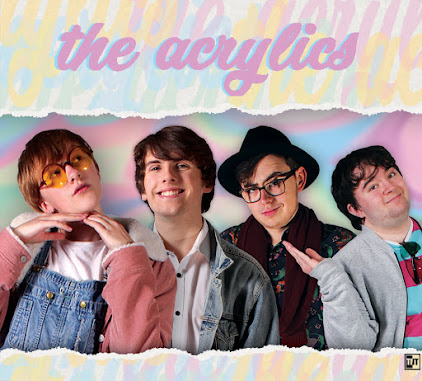
This is my group for this project. Click to enlarge.
From left to right: Noa knows the most about music, Jack, being a drama student, is the best actor out of all of us, and I am probably the most technically-inclined of the trio. We are all quite creative, and are all committed to the project, meaning we should all remain well-organised and flexible. This will allow us to all excel in behind-the-scenes roles such as planning and directing, while individually excelling in our preferred areas, but still helping out in each other's preferred areas to help get things done better and faster. We have decided to meet four times in Week 1 and three times in Week 2. For Week 1, this includes Periods 4 & 5 on Monday, Period 6 on Wednesday, Periods 2 & 3 on Thursday, and Periods 1 to 5 on Friday (as we have three free periods interrupted by a double Media lesson, and thus we will continue right through the whole session with project work.) For Week 2, this includes Periods 7 & 8 on Monday, Period 1 on Wednesday, and Periods 7 & 8 on Friday. We have also decided that, should we ever decide we need more meeting time, we can meet at lunchtime on any day of the two weeks, as we have left those clear specifically so they can be back-up sessions, as well as after school when necessary. Currently we are communicating over a Facebook Messenger Group Chat for general discussion, a WhatsApp Group that includes our teacher for when we need her guidance, and over School E-Mail when we need to share files and so on.
A behind-the-scenes timelapse of the whole shoot day. It shows all, or at least most, of the experiences I have mentioned in the post, and is a good overview of the day to start with.
I enjoyed the main workshop shoot day quite a lot. It was a completely new experience for me, and thus it was pretty scary at first, but I think I settled into acting and so on over the course of the training sessions, so the main day wasn't too bad, and I was able to have fun.
The main role I took was acting as one of the cool kids- the actors in the music video who weren't part of the band.
Here is an image of me in costume, getting ready to act in a group shot. There is a fellow cool kid to my left, so right of frame, also wearing their costume- the cool kid costumes consisted of casual clothing. On my other side is a band member, wearing their costume- the band costumes consisted of more formal clothing.
The shot we went on to do after the preparation seen in the above picture. As you can see, the order of people is the same, as we go from the back of the line, dance up the middle, and join back up at the front. We had been trained to give it our all yet perform naturally while doing this shot.
The majority of the work I did on the day was acting work- I went into hair and make-up, acted in group shots, acted in solo shots, and so on.
A photograph taken by a friend of me at the hair and make-up station.
I also helped out on the set when I wasn't acting- as I was just one of many cool kids, and not one of the band, I didn't have as much time on camera as some others, so I used this extra time to help out where needed.
I operated the clapperboard a few times- the director and main crew had a lot of important things to worry about, so me and the other actors taking over the process of writing in the shots and using the clapperboard helped them a lot, and ensured every shot was properly marked for editing later on.
A 'behind-the-scenes' screenshot from one of the takes where I was operating the clapperboard. I had to write in the shot number and take number and so on.
I also performed a couple of runner duties, such as helping move equipment and props like desks and chairs around, for example setting them up for certain shots and then getting them out of the way, as well as helping to get the food cart at lunch time so that the crew members and other staff could have something to eat.
Another picture of me acting- as I was in all of the shots requiring these desks and chairs, I helped get them out and set them up, as well as put them away afterwards.
In my downtime I also took a lot of photos of the goings-on of the set, as well as people acting and receiving hair and make-up work and so on, for use on this blog as well as those of my classmates.
Here I am during one of my breaks- I took the opportunity to sit down for a bit, and swapped to a long lens so that I could take some good shots of what was happening on set.
I think my best bit in terms of what I found the most fun was probably the solo acting. It was generally less intense than the dancing groups shots, which were fun, but made me a bit self-conscious at times, although I think I conquered this and I don't think it affected my performance. I thought the solo acting would be scarier since the focus is just on you, but thanks to the crew it felt like a casual chat or one of the acting exercises, but still provided a lot of good footage.
A profile shot of me during some solo acting work. The lighting was adjusted specifically for this shot, and I am performing a serious but fairly neutral expression.