My finished music video:

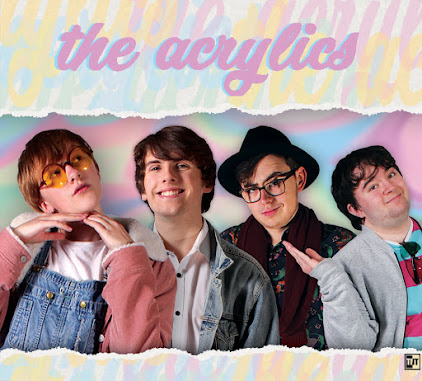
My front digipak panel:

My front digipak panel:
Right-click the image and open it in a new tab for a bigger version.

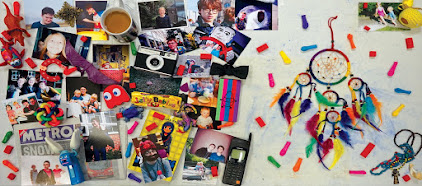
My inside digipak panels:

My inside digipak panels:
Right-click the image and open it in a new tab for a bigger version.

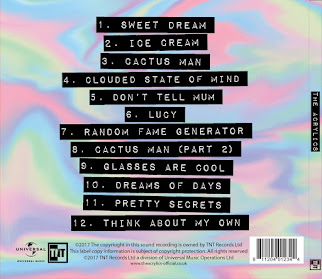
My back digipak panel (with album spine:)

My back digipak panel (with album spine:)
Right-click the image and open it in a new tab for a bigger version.

Click the image below to open my website in a new tab:

Friday, 22 December 2017

Construction Post 3: Week 3 video and photo shoots

The third week of production was mostly finishing planning for our outdoor promo shots, and then carrying out these plans, all in the span of the one week we had allocated for this. This presented its own set of challenges in comparison to the studio promo shoot- while we no longer had as strict timing for when we could take the photos, we were also no longer using a controlled environment in school. We thus had to plan just as much as with the other promo shots, just for different reasons.

Our Challenges

We had to get permission from our teachers to leave school during a lesson, and then stay out of school through the end of that lesson into some shared free periods which we had scheduled for media use back at the start of the project. Then we had to get permission from the school office in order to leave the premises during school hours. We thus had to make sure we got everything ready quickly and efficiently so we could do everything properly and officially while still having enough time to take a variety of photos. We arrived to school in most of our costume, as the costumes consisted of normal clothes designed to look like something our characters would wear, and I provided the photography equipment as I do it outside of school as a hobby- this meant we had one less thing to organise in school and sign off for, as we didn't have to use any of media's equipment. We then used the area around the school as the location for our first shoot, since we had London streets, a park, and a bus stop to work with just a couple of streets away from school at max. Thus we overcame the challenge of staying on time even with all the extra preparation needed but still getting all the photos we wanted.

Our second challenge was finding a wider variety of photos to get. We decided to use the weekend to go to Whitechapel, an area further into London not too far from any of us, and then take photos with our phones instead of dedicated cameras, to mimic the look of the band going out. This came with its own challenges, such as organising ourselves without in-school meetings, and travelling into London, but we overcame these and reaped the benefits of more photos, which were more candid than our previous pictures, all in a new location, and in the evening too, and we even had the chance to get Tom in some more photos, as he could not attend the previous shoot around the school in Edmonton. Thus we managed to get a very large variety of shots across both shoots in the span of a week.
A candid 'selfie' taken by Noa as Casey with the rest of us acting as our characters too. This kind of shot is important as it further reinforces our band's identity, shows them as real people going out into London like any group of friends might, and includes Tom who up to this point had been slightly underrepresented in the photoshoots. Click to enlarge.

My Contributions

I contributed to this stage of the project as I have done for all stages. I was an actor in all of the shots, both by myself in solo shots and interacting with Noa and Jack (and later Tom) as their characters for further characterisation and interesting promotional shots. I took a lot of the photos, as Noa was in more photos than either me or Jack as she is the main personality of the band, and thus required one of us to be using the camera, and because Noa and Jack were often in photos together as part of their sibling personas, necessitating myself being on the camera. I also provided my own photography equipment for group use as a way of saving some time and effort by bypassing the need to use the media department's equipment. I provided two lenses, and got to learn how to use the second lens which I had only recently acquired- I used it to take some interesting headshots of both Noa and Jack, that were very different than the standard shots and which were unattainable in the studio shoot or with the other lens, and which I learned how to do while out shooting. I of course also helped plan and organise everything.
A shot of Noa and Jack at an Edmonton bus stop, taken by me. We needed a lot of photos like this, as they are important in playing up the relationship between their two characters, and thus I had to take them as the remaining group member. Click to enlarge.
A photo I took of Noa using the second lens I had, with a blurry background effect unachievable with my camera's standard 'kit' lens or in one of the studios. Shots like this are an example of how we pushed ourselves and learned how to experiment with the equipment more when doing our first ever outdoors shoot. Click to enlarge.

Audience Feedback

Our audience told us to get some more candid shots than were possible in the studio- this, combined with teacher advice to get more candid shots that we had already received, lead us to doing the Whitechapel shoot, which was a benefit to us as it provided a lot more and varied material to work with.

We were also told by some target audience members to play up the personality of the front of the band, which for us is the singer. This is one of the things that lead us to taking lots of pictures of Noa acting as Casey, as well as lots of pictures of her interacting with Jack as her character's brother, to further her personality.

Our Progress

Overall I think this week was a success. We expanded on the success of the previous photography week by getting another swathe of images, very different to the last week's images, and different between both of this week's shoots. While we could have found more opportunities in Whitechapel, we still managed to best the darker conditions and take some good nighttime photos to supplement our Edmonton photos. We responded to the unique challenges of each shoot, while adapting based on our own ideas and audience feedback, and obtained a lot of material for the website and, crucially, our band's social medias, where outdoor shots will form the majority of photos posted instead of studio shots. We ended up with a large variety of shots to serve us well in the rest of the project.

Construction Post 2: Week 2 video and photo shoots

Week 2 of production and construction consisted in part of planning for the future weeks of photos and editing, but mainly of planning and then carrying out the photo shoots for our album cover shots, as well as our various studio promotional shots.

Our Challenges

We had the small photography studio set up in the media department available to us some of this week, having to share it with one other group, the third group being in the main studio. The photography studio consisted of a small collapsible white screen, a camera on a tripod, and multiple lights synced up to the camera, with various diffusers and settings available. The first challenge was learning how to use all of this new equipment, which we all tackled very well with the help of the technician- we were proficient in its use quick enough to get all the images we needed.
A picture of me from the studio photoshoot. Note the dark clothing- this is because I have not yet changed into my costume, which is a lot brighter, as we are currently learning and experimenting with the equipment, so we don't run into snags and issues later, speeding up the whole process. Click to enlarge.
The first problem we encountered when shooting commenced was the availability of Tom. While us group members had already marked down when we were all available at the very beginning of the project, Tom wasn't as tied to it as us, and had his own commitments. We thus had to plan around when he was available- this meant we had a lot less time for his shots, but by maximising the time we did have by using all possible slots he was available, we ensured we got lots of images of him and nullified any danger of missing out on key pictures needed for the digipak and also the website.

Another challenge was the limited time we had overall- as we were sharing the studio with another group, and the studio was set up in a media classroom needed for other things unrelated to the music video project, we had limited chances to be in there. This further impacted the problem of finding time for Tom, but even with that out of the way, we had to be very efficient in order to take lots of pictures of all three of us main group members in the estimated two days we had.


My Contributions

My own contributions were similar to that of my fellow group members. I was one of the four people being photographed, and I had to stay in character as Guy Chapman as well as changing costumes so as to ensure some variety. I had to figure out a variety of poses, adapting them based on what feedback I was receiving both from my group while actually shooting and from the audience when getting feedback between shoot sessions. This resulted in me doing some calmer poses to better reflect the professional look the album and website need to have, as well as the more energetic ones I was already doing as part of Guy Chapman's characterisation. Outside of acting, I also took a lot of photos. When I was on camera, I directed the lighting, and also moved it around myself- the directions the lights were pointing had to be adjusted based on what the photos looked like, in order to finally reach the perfect photo. I also did the framing and composition of all the photos I took, working in tandem with the actor I was photographing, whom I directed to get the shots I needed. I took a lot of photos of Noa, Jack, and Tom, many of which ended up in the final products.
A picture of me acting as Guy Chapman for the studio photoshoot. I had to stay in character as with the filming of the music video, and the others took a lot of photos of me as I figured out different ways to show off Guy's personality. Click to enlarge.
A picture of Noa and Jack acting as Casey and Hugh, showing off their characters' sibling relationship. This relationship is very important to the identity of our band, and appears throughout the products- thus it was important to get photos such as these, which were taken by me, as of course both Noa and Jack had to be in the photos, and Tom wasn't a group member and wasn't available much besides. Click to enlarge.

Audience and Teacher Feedback

After talking to our audience, who said some of our more conventional pictures were sometimes a bit boring, we decided we needed more options for the digipak. This ended up being a very good decision, as we ended up using some of the less normal and more dynamic shots when we came to creating the final digipak. 

Another piece of feedback was that we were told by a teacher, who was familiar with the process of taking studio photographs and so on, to look more candid- we facilitated this by having conversations while shooting and having the photographer take pictures at surprising moments. This improved the overall quality of almost all of our shots.

Our Progress

Ultimately the second week was a success. Despite the limited time by the week's end we had a lot of professional-looking studio photos for our album and website. As we went along we faced and overcame many challenges, and implemented many changes, some of which we decided on ourselves, and some of which we received as feedback. While we could possibly have gotten some more full-body shots, overall we still got everything we needed, and to a very high standard as well, to be carried into the next stages of the project and facilitate their success in turn- the next construction stages are a lot harder without quality material to work from.

Construction Post 1: Week 1 video and photo shoots

The first week of construction was the shoot week. It was one of the busiest weeks, for many reasons. One is that it was one of the most physical and hands-on stages of the project, as we had to shoot everything we needed for our video mostly by ourselves in the space of a week. Another is that we had no leeway to continue into the next week because of studio bookings- this meant challenges were intensified because we had to respond to them even more quickly and efficiently than usual, as we had to implement solutions in the same week. We managed to do all of this effectively and the week was a success.

My Contributions

I personally worked well. I assumed every role of production at some point and carried them out effectively- for example, I acted, directed, operated the camera, did the lighting, set up and packed away the studio, did behind-the-scenes work, and much more.
Here is a picture of me preparing to act in the party scene. I am wearing my Mortal Kombat costume while sitting at the drums I play in the video, with a party extra standing behind me. As one fourth of the band, I had two costumes and personas to assume while being filmed over the entire week. Click to enlarge.
A picture of me directing as I give an actor confirmation that their position is correct. Throughout the entire week I took the role of director many times- as Noa had a lot of screentime, and Jack was often in the scene with her playing the part of her character's brother, I directed a lot while they acted. Click to enlarge.
A picture of me operating the camera, zooming in the lens while looking at the monitor. As with directing, I operated the camera a lot out of necessity due to the difference in the number of scenes between myself and other group members at certain points- I often directed and operated the camera at once. Click to enlarge.
A picture of me operating the lighting desk. It was necessary for someone to be in the gallery most of the time, and it was often me who took on this role while my other group members took on different ones- I changed lighting set-ups and varied the intensity and so on, and even used the sound desk when required. Click to enlarge.
A picture of me adjusting one of the lights as part of the studio set up. I also adjusted the lights throughout the day too, if required, and did a lot more behind the scenes jobs to keep everything running smoothly. Click to enlarge.
My solo contributions include lighting, directing, and filming every shot that focused on or only included Jack and Noa, as well as all of Tom's solo shots. I acted in every scene in which Guy Chapman was present, as I played the part of that character, which includes every band shot and all of the 'Mortal Kombat' shots, as well as the pillow fight and party scenes. I ensured I had the track on my phone at all times and often was the one who linked up my mobile to the sound desk in order to play the song so that we could lip-sync or perform to it. I personally took charge of directing the trichromy shots as I had the best understanding of how to get the optimal footage to merge and create effect in the editing stage, having also been the one who came up with the idea for these shots too. I of course also did a fair share of the standard studio work, on top of my specific contributions, some of which are mentioned here.

Our Challenges

Our group faced a fair few challenges unique to ourselves, outside of the general challenge of shooting a music video without much help in a short span of time, which all three groups faced.

The first one was when we had to immediately transition from the test shoot on Friday 3rd November into the first day, and one of the busiest days, of the main shoot on Saturday the 4th. This day was when we almost exclusively filmed the party scene footage, which necessitated organising not just ourselves but also the large group of extras required. We had to teach all of them everything we had learned and planned over the course of the project in a concise manner- this included studio health and safety, what they had to do in the video, and much more. Then of course we had to manage them throughout the day, not just in terms of directing them as actors and so on, but also in terms of keeping them happy as people willing to help us out. We overcame this challenge very well, as we confirmed with some of the actors later while we were collecting audience feedback (the actors are part of our target audience) that they left very happy with the unique experience despite the fairly long working day, and we got all the footage we needed.
We had an extensive group of extras to manage on the very first day of filming, besides having to manage ourselves and Tom and do all the standard work needed for the average shoot day. We did this efficiently and successfully. Click to enlarge.
Another challenge we faced, possibly our largest one, was that a whole morning of footage was corrupted at some point. We planned for this to some degree- on Thursday, we had scheduled a check of our footage, and it was this check which revealed to us that most of Tuesdays footage was corrupted on all of the places it was stored, meaning we had no back-up. We thus had to figure out how to re-shoot a large portion of both the 'Alice in Wonderland' and 'Singing in the Rain' footage, but luckily we had planned back-ups on Friday evening and on Saturday, which we re-planned our shoot schedule around when we found out what had happened. We also collaborated with the media technician, and decided with him that we should have an extra back-up- he thus took our footage and stored it on his computer in the media department on top of the multiple studio back-ups. We never encountered this problem again, and the other two groups who both shot after us also took advantage of this extra back-up.
The relevant page of the shootboard that shows the rescheduling. We took one of the loose pages of shootboard from before we put other copies up onto the walls, and wrote in by hand the new slots for certain shots. As you can see, we have pushed multiple shots from the corrupted set-ups into the previously less busy or even empty back-up days. Click to enlarge.
We also faced various smaller challenges throughout the shoot. One of these included when we had to make the decision on what to do with the cyclorama- the seam between the wall and the floor was visible on camera. We originally planned to keep it visible on account of our DIY homemade aesthetic, but we also wanted to try and eliminate it to see how it would look without a seam on the advice of the media staff. We wanted to explore all routes and did not want to disappoint the staff, so we tried various ways of covering up the seam, including taping paper all along it. This took up a lot of time, which meant we had to be even more efficient with the following shots and even reschedule some. Ultimately we decided we liked it how it was originally, but it was a useful experience in terms of experimenting in the studio and solidifying ideas while shooting, and we managed to both test every possible configuration and ensure we were making the correct decision to produce the best-looking footage, while also not impacting on the amount of shots we could get.

Audience Feedback

We made changes to our shoot throughout, adapting to different situations as well as audience feedback- we got the party scene actors to look at our ideas, as well as some of the non-party shots we filmed that day, to get their feedback, as they are part of our target audience. They suggested we make the lighting for the band shots more pink, so we did. We also got Tom's feedback throughout the week, as he was constantly present due to being an actor, but not part of the planning process- thus, as a target audience member outside of the main group, he was able to guide us, suggesting improvements and choreography for his shots (such as the movements during the 'Sergeant Pepper' set-up he was part of) as well as other areas, such as his idea to improve the handheld shots by standing still and trying to be more stable rather than moving around so much and letting the camera shake get out of hand. 

Our Progress

I think, overall, we made very good progress during this week. While we only focused on the filming part of production, we also got every bit of footage we might ever need for the project. We faced various challenges, but combatted them effectively within the very limited timeframe we had for the shoot.

We managed to develop our ideas on top of the efficient work we were doing, and ultimately had a very successful shoot. Looking back, we could have done more variations on certain shots as part of the experimentation we did- we did various angles for the instrumentalists' solo shots, for example, but not many different angles for the singer outside of the handheld shots- and we could have improved on the 'Sergeant Pepper' lighting somewhat as it ended up being a little bit more similar to the 'Alice in Wonderland' lighting than originally intended, but these reflections only serve as another piece of experience we can carry into the rest of the project, and we still ended up with high-quality, varied, and interesting footage that was a huge boon during editing.

Sunday, 26 November 2017

R+P Post 33: Reflections on my role and contribution during Research and Planning

My role in the project was the same as both of my group members- an equal share of the work overall, while excelling in certain specific areas. My learning curve has also been similar to theirs- while I have done filming projects before, and while I have been part of a music video creation project before, I have never undertaken such a large project with just a group to rely on. The previous filming projects didn't fully prepare me for the music video process, including the research into this area, specialised planning, and music video filming style; nor all the extra work such as the album cover and website. The music video project didn't fully prepare me for the shoot, as I didn't have to plan or set-up the shoot last time, and only had to act in it, without really touching the camera or lighting or anything. Thus, as we proceeded with this project in stages, at each stage I utilised my knowledge and experience from similar steps taken in previous projects, while adapting for all the new challenges, and learnt alongside my group as we went along.

As the work we shared equally was still of course of the upmost importance to the success of the project, with each of our contributions to this burden being necessary for this success, I will share some examples of it.
A picture of me when I happened to be the one using the lighting desk. Click to enlarge.
A picture of me directing, while standing next to the camera. Sometimes I, along with the other members of my group, would both direct and operate the camera. Click to enlarge.
A picture of me setting up the camera at the beginning of that day's shoot. Noa can be seen in the background, also setting up. This was another one of the things we shared equally, yet all made an important contribution to. Click to enlarge.
A picture of me operating the camera, changing the focus while monitoring the screen. Click to enlarge.
A picture of me manually adjusting one of the lights from the ground floor of the set, while working with another group member in the lighting gallery. Click to enlarge.
As mentioned earlier, along with all of the regular work I shared equally with my group, such as doing research, making documents, working on all aspects of the shoot, and so on, I also excelled in certain areas, as did my group members. I thus will now leave out the pieces of work I shared equally with my group members, and just focus on those aforementioned specific areas.

During video research and planning, some examples include...
  • I contributed various tracks and influences and so on. One of my song suggestions, Sweet Dream by Black Cat Zoot, became our chosen song. Some of my influences, such as band New Young Pony Club and music video "Ghengis Khan," ended up being important influences on the respective parts of our project.
  • I created the logo for our record label.
  • I had the idea of using trichromy as a special effect in our video.
  • I provided people who proved useful- for example, I did audience research with people such as my cousins, who fit our audience criteria perfectly, and I got my brother to be in the party scene. This also extends to the other research and planning sections.
  • I created various shots which made it into the final cut, such as the one where Casey jumps and the scene transitions with the jump, and the one where the camera is focused on the hands of the keyboard player.
  • I contributed to the choreography of the fight scene, even while performing in it.
  • I contributed to the style and colour scheme of the video, suggesting various ways we could light different set-ups, even creating some moodboards. Some of these ideas made it into the final plans.
During album cover research and planning, some examples include...
  • I provided various useful influences, such as Fantastic Playroom, and noted many useful conventions- I noticed the border around both the California Nights and Talking Dreams album covers, for example.
  • I created the final rough flatplan after suggesting various ideas and influences myself and working with my group to develop all of our ideas.
During website research and planning, some examples include...
  • I suggested useful influences, such as the website of the band Chvrches, and noted useful and influential conventions, such as a pop-up/start screen.
  • I contribtued to the final flatplan with my ideas, some of which made it into the final version.
During pre-production, some examples include...
  • I wrote up a lot of the timeline, especially the end section.
  • I created various stickynote shots for the storyboard.
  • I filled out a lot of the shootboard, especially in terms of the images.
  • I helped create the screen-test.
  • I contributed to the designing of the promo shots.
  • I created the entire Scorpion costume myself, as well as the elaborate parts of the Sergeant Pepper costume. 
A picture of me working on one piece of the Scorpion costume, as some completed pieces lay nearby, along with the completed shirt and epaulets for the Sergeant Pepper costume. Click to enlarge.
  • I provided various pieces of costume, such as Casey's shirt, Guy's entire outfit, Terence's hat, and more.
  • I helped create and paint various cardboard props- for example I did a lot of painting of the slot machine, and I figured out how to create a lamppost around the pole we already had.
  • I provided various props, such as Hugh's guitar, the 'Alice in Wonderland' mirror, and the sofa pillows.
  • I helped to create various lighting set-ups, as well as organise the sets.
A picture of me saving a lighting set-up I had just worked on, still in my band costume from performing earlier on. Click to enlarge.
During production, some examples include...
  • I performed in a key role as Guy Chapman, a member of the band.
A picture of me as Guy Chapman, getting ready to continue performing. Click to enlarge.
A picture of me in my Scorpion costume, preparing for the fight scene I performed in after having helped choreograph it. Click to enlarge.
  • I took the lead when filming the trichromy shots so that we would have footage we could use to get the effect.
  • I worked on certain shots alone because of how the schedule worked- a lot of the solo shots of Tom performing as Terence, for example, were set up and filmed and directed and so on by me alone, as Noa and Jack had to be elsewhere.
Overall, without the sharing of the burden between each of us in terms of the regular work, as well as the various different areas we all excelled in (some of mine are mentioned here, but Jack and Noa of course had their own,) we would not have been as successful in this period of the project. I think I learnt a lot as I went along, performed my roles well, and made a very strong contribution to the project.

R+P Post 32: Test shoot and rough edit

While we were making preparations for the main shoot well in advance, before we actually got to the main shoot we had a test shoot to do. The test shoot took place on the Thursday and Friday before the main shoot, with the first main shoot day being the Saturday immediately following the test shoot. Thus we also had to prepare for the test shoot, and in turn the test shoot was valuable preparation for the main shoot. As well as effectively being a 'dress rehearsal,' following on from the previous rehearsal, in which we got to practice more as well as use some more props and costumes, we got a chance to make preparations for the main shoot in that we tweaked various lighting set-ups that were saved to the lighting desk, for use in the main shoot. The test shoot was thus basically a big refresher on how to use the studio and how to get the footage we wanted for our video, indirectly helping us in the main shoot by preparing us for it more, while at the same time also directly contributing to the set-up of our main shoot through the lighting as well as props and costumes and so on (we were able to leave everything we needed in the studio overnight on Friday for use in the main shoot the next day.)

We organised it like it was our main shoot, creating a shootboard to organise ourselves before the shoot, and at the same time getting some practice in creating shootboards, which paid off when working on the more important main shoot shootboard. However, in the interest of time, we didn't do a full shootboard- it was more of a schedule, that served the same basic functions as a shootboard.
One page of our test shoot schedule draft. Instead of a full shootboard, we just consolidated all of the basic information we would need on the day, such as who is needed when and what set-up to do. It was more than enough for the test shoot. Click to enlarge.
The final test shoot schedule sheet. As the project as a whole has strict timings and deadlines, all of the groups share the test week, and just use different days. We are colour-coded in red. Everything we needed to get into the studio and generally practice our shoot is included in our two columns. Click to enlarge.
We got to see how we all worked in all aspects of the shoot, rather than just acting as with the previous rehearsal. We got to use the camera and actually capture some footage, work on the lighting both in the gallery and with the adjustment rod on the main set, get the sound system up and running, and so on. However, we did also get to practice acting more as well, this time with lighting and more costume and props, and all viewed through the camera so that we could work on composition and framing and similar.
A good example of some test shoot footage, roughly edited to show what the final version might look similar to. Here, we have our final lighting for the 'Alice in Wonderland' set-up, which we worked on before filming this footage; plus, Noa is in her final costume, and we have most of the set prepared so that we can accurately frame and compose the shot. Noa is practicing her acting, while I film, and Jack directs. Click to play.

This was really helpful to us as it allowed us to practice everything we would be doing in the main shoot soon after wrapping up the test shoot. We learnt a few things about how to use the studio, and refreshed our knowledge on things we already did know. We figured out if the set and lighting looked good, and what the actors would look like performing in them. All of this has benefitted us and our project because we know we are on the right track.
Some of the 'Singing in the Rain' test footage. This was useful in that it showed us how we WEREN'T on the right track- the lighting was much too dark once we looked at it outside of the studio, despite how it appeared in real life and on the camera screen underneath the studio lights. Thus, we updated the lighting for the main shoot to include some more white, to better illuminate everything. Noa and Jack got to practice their performance, while I set up and monitored the camera. Click to play

The test shoot also benefitted the project in that we found out what we were doing wrong. This included shooting issues, such as how lighting looked once outside of the studio regardless of what we thought it looked like during shooting, as well as behind-the-scenes issues, such as how to most effectively and safely set-up, use, and pack up the studio equipment and lights. Luckily, however, we found out we were mostly fine on all fronts, and we didn't have any major accidents or mistakes or have to make any drastic changes.

Overall, I think the test shoot was great. It provided a condensed version of the shooting process, from pre-production and planning, to production and shooting, and even to post-production to some degree- while we didn't have time to do a full edit, given that our first main shoot day was the day after our final test shoot day, we did get to make small rough edits to see what certain sequences would look like, as well as review the footage for any obvious mistakes. It was a hugely beneficial step towards getting a good end product out of our project.

R+P Post 31: My call sheet

During the process of creating the shootboard, we realised we needed some form of call sheet. Thus, we decided to integrate it with the shootboard, in order to enhance the 'all-in-one' function of the shootboard. We sat down with Tom Brown, the only cast member (outside of the extraordinary circumstance and set-up of the party scene) who isn't part of our media group, and talked with him about his timetable. We had previously also confirmed with Lily Mo Browne that she could be our make-up artist- thus we also sat down with her and went over when she was free too. We implemented their concerns into our call sheet and storyboard, and marked down whenever they were free to shoot and do make-up, or just available to help out on set even if they weren't needed to fulfil their primary roles.
A used copy of the front page of the shootboard, showing the integrated callsheet at the top. We made sure each cast member had one of these before the shoot, and we put copies of them all around the studio during the shoot so that after people arrived they could see when they were first needed and so on. Click to enlarge.
Creating a call sheet was an important step, as it helped us organise some elements of our shoot less under our control, but still vital to our video- both Tom and Lily are outside of our media group, and don't even do A2 Media, yet have fairly major roles in the shooting process. It allowed us to provide necessary information to these people, so that they could be available when we needed them to be- we gave each of them a copy of the finished shootboard with integrated call sheet so that they could have all of the information they needed, in regards to availability and location and time and so on.

R+P Post 30: My shootboard

Nearer to the time of the final shoot, we decided to create a shootboard, in order to organise ourselves as well as everything and everyone we would need for this crucial period. The shootboard combines a lot of different elements into one document, and thus serves as a hub for everything in the shooting period. It turns the shot list and set-up list into a practical schedule with times and dates, and even incorporates elements of the props and cast lists to collect and centralise at least a summary of this information into one place to avoid having to reference too many sheets when looking for any information (for example, the main props list may not have to be referenced if the shootboard conveys the necessary information on this matter for the shot currently being filmed, which for us it does.)

UPDATE EVIDENCE
The first page of our finished shootboard. This page contains the most information, and is a good example of a typical page of the shootboard besides. It shows the call times for different cast and crew members, as well as some examples of shots, with the necessary shot images and information, as well as props and casting, along with the planned time to film, all in one row. Click to enlarge.
The shootboard creation process was a success- we organised everything related to our shoot into one, even using keys to help us (for example, the cast section has names bolded and unbolded, bold meaning they are needed in the shot as actors and similar, and not bold meaning they are available for behind-the-scenes work but not needed for the shot itself.) We plan to have multiple copies, at least one loose copy on hand to bring around with us, and some on the walls of the studio in different places, such as the main set and the gallery, so that they can be quickly referenced at any time and the benefits mentioned here easily reaped.