Following on from the timeline, we decided to create a storyboard. Whereas the timeline was the first version of our ideas consolidated onto one sheet, with a focus on the overall structure of the video with as much detail as we could fit, the storyboard had more of a focus on the shots themselves. The timeline described each shot briefly with text- the storyboard has actual images of each shot, with the framing, composition, and other useful and/or essential information available at a glance. To allow for this level of detail and aid in our organisation, we ended up dividing the storyboard into sections across two A3 sheets instead of just one as with the timeline, but this hasn't negatively impacted us too much as each sheet is laid out simply and both sheets are stored together; the pros outweigh the cons.
The first page of our storyboard. As with the timeline, I will provide closer photos where relevant, but this overview should serve to show that we have organised the sheets into sections to aid readability, while including all the shots individually with a key to help in getting information at a glance. Click to enlarge.
The second page of the storyboard. The second set of sections were spread out equally like the first, aiding our organisational efforts. The sticky notes themselves are easy to read, and having them separated into sections is good for preserving this readability. Click to enlarge.
We divided the storyboard into set-ups. We knew we would have a lot of different kinds of shots of the band, so we gave the band a set-up, and we knew we would have a narrative section for each of the four pieces of classic media we incorporated into the video, as well as a section for the lead singer falling asleep and waking up in her home, so we gave each of those a set-up too. In this way we could see every single shot, camera position, etc. we would need for each section (as each set-up will take place in a different location within the video, and thus each will have their own set, lighting, mise-en-scene etc.) as well as which sections will take us longer to film as they have more shots. The shots themselves have fairly detailed drawings of what is taking place, showing the framing and composition as well as the actors and props needed to some extent. The colour of the sticky notes corresponds to a key, which further aids how much information can be gleaned from one look at a shot.
An example of one of the sections on the storyboard- this one is for the "Mortal Kombat" video game set-up. You can see all of the different shot types and framings we will need, as well as the costume of certain characters, and even the 'fight sign' prop. Text descriptions aid understanding of what is happening in each shot- one even has an editing note as that shot will probably take place in slow motion. Click to enlarge.
The storyboard key- yet another tool for gaining information quickly, easily, and efficiently from the storyboard, which is what it is designed for. Click to enlarge.
We produced a timeline in order to lay out solid, concise ideas for the music video's structure, shots, and so on, rather than leaving everything split up across all the research and planning documents we had created so far. Having everything all on one large piece of paper, with shots laid out in chronological order with text descriptions and accurate times to match up with the song, was a really big help in organising our thoughts and finalising our planning.
A picture of our entire timeline. I will provide closer pictures when talking about relevant sections, but hopefully this overview still allows you to see how we managed to pack as much concise and useful detail on the final plans for our music video onto one sheet, that we can reference whenever we need it. This includes shots with shot types and text descriptions, some lyrics, accurate timings, and more. Click to enlarge.
Our planned structure is to work around the lyrics- we broke the timeline up into verses and choruses, and we timed the lengths of certain sections, particularly the narrative sections, around the lyrics we were interpreting. We even allocated the time for the outro scene that takes place once the song itself has ended.
An example of part of our timeline- this is the end section. You can see where we have marked off the choruses along the line, and drawn in the details for the shots around it. You can also see the outro right at the end, as well as the large party scene that takes place just before it. Click to enlarge.
Overall the timeline was a very useful document to create. We achieved our aim of consolidating and finalising our ideas onto one sheet, and we created the first detailed structure for our video- we can even look at the timeline while editing the footage to guide us.
We decided to create a visual representation of our music video to go along with all the ideas and interpretations we had planned so far. We realised that pictures and flat plans wouldn't be enough, and that to represent a full video, we needed another, preliminary video. This was the steal-o-matic, in which we took clips from various sources, mostly influential music videos and the pieces of classic media we were working into the narrative through interpretation of the lyrics, and then edited them together as if they were actual footage from a shoot into a rough visual representation of our plans. We were able to use clips from lots of our influential artists, as well as movie and even video game clips, all to build a real, viewable representation of what had previously just been research, ideas, and plans.
Our steal-o-matic. It is only a minute long as it is simply a preliminary test for what our video could be, not a full prototype for the final version. It contains clips from many sources, each relevant in different ways- they might have a shot type we like, they might have a colour scheme we wanted, etc. We edited them in the same way we are planning to edit the real thing. Click to play.
One way it helped us was laying out our ideas for where lyrics, music, and video/editing all interact. Right at the beginning, for example, there is an instrumental section, with some guitar chords interrupted by brief solos on the piano and guitar and so on- when the drum solo kicks in, so does the first verse. We decided to have our lead singer asleep on the sofa for this instrumental part, to set up the dream part of the lyrics and narrative. The musical interruptions would also be edited to interrupt the narrative with close shots of the instruments that were interrupting, and then when the first verse starts and the music really starts to pick up, suddenly we switch to a long and wide shot of the band with the lead singer now performing with the band(something we had picked up from Vernallis' ideas of breaking continuity editing and going from close to long and vice versa to make the video dynamic.) We found some really nice shots from some of our influential music videos that contained the framing, colour scheme, and actions that we needed to construct this section, and thus we edited them together into our steal-o-matic, and were all able to see how these ideas actually worked visually in a video.
The opening section of our Steal-o-matic. The sleeping is from "Feeling OK" by Best Coast, the keyboard is from "Montreal" by Roosevelt, the guitar is from "Crazy For You" by Best Coast, as is the handheld close-up from the next interruption, and the shot of the whole band is from "Geronimo" by Sheppard. Click to enlarge.
The steal-o-matic also allowed us to refined our performance segments, even in terms of set design and camera as well as the performance itself. For example, we have used Sheppard's "Geronimo" quite a lot- this is because, although we are not planning on having a large set with lots of props scattered around as they have, we are planning on having energetic long-shots of the whole band in a studio setting. Plus, the colour scheme of having bright pastel colours (in the form of the many props in the Sheppard video, and likely lighting and some props in ours) on top of a plain, more neutral background (in the Sheppard video, this is the grey room, but we will likely just have a blank studio cyclorama to experiment with) is something we have been working on for a long time.
A clip from Sheppard's music video for their song "Geronimo." We have used parts of this in our steal-o-matic, as the varying shot types, including the extreme long shots of the band in a studio setting, as well as the camera movements, are quite useful to us in visualising what our video might look like in terms of camera. Additionally, although they have more props to build mise-en-scene, this video has a similar colour scheme to what we are planning and has been an aid in planning set design for our video. Click to enlarge.
Narrative is also something we refined through our steal-o-matic. As we wanted to use references to various pieces of media in our video by recreating them in a style that fit our artist and aesthetic, we took this opportunity to edit in clips from films like "Singing in the Rain" and even video games like "Mortal Kombat," scenes from which we were going to reproduce as part of the narrative's storyline, in which the lead singer has dreams of interacting physically with characters from these pieces of media. This allowed us to see how these more unorthodox video clips would fit in with the rest of the music video- and in the end, we decided that (even without being able to recreate them in our own aesthetic and just using raw footage from the source media) they fit quite well. We could have a small dance scene like the famous segment from "Singing in the Rain," we could use a profile long-shot to mimic a match from a fighting game like "Mortal Kombat," and then edit them along with all the performance clips when it came to making our final video.
One of the most famous scenes from the film "Singing in the Rain," which we are planning to recreate in our music video. Dance scenes are not uncommon in music videos- we just have to re-choreograph this particular dance to be suitable for our video, while melding its darker colour scheme and set with our own colour scheme and mise-en-scene (possibly by making the orange light of the lamppost more pastel and simplifying the background.) Seeing these clips in the steal-o-matic made these developments possible. Click to enlarge.
One of the first things we did after finalising our track choice was create a rough lyrics sheet for the song (as we could not find a good one online) and then use this sheet to make notes on our own analyses of the track. To start, we simply went through all the lyrics and wrote down things that occurred to us. As we went through, we noticed the general themes of nostalgia and closeness with somebody, as well as quite a few lines which we decided to interpret as references to various pieces of old but well-loved media in keeping with these themes. These include the lines "the morning I was dancing in the rain" which we linked to the movie 'Singing in the Rain," and "Lucy in the sky, smiling down" which we linked to the Beatle's album 'Sgt. Pepper's Lonely Hearts Club Band' which contains the song 'Lucy in the Sky with Diamonds.' Lines like "you took my hand" and "together forever," as well as the chorus "don't wake me up, I'm having a sweet dream, about you and me and a slot machine," all point towards the love side of the song's themes. We will try to visually interpret these lines and themes in the video by having the lead singer exploring a nostalgic dream in which she meets the characters from these pieces of media, while mourning a lost love and looking for another. Analysing the track like this was beneficial as it really helped us cement the ideas floating around in our heads just from listening to the song and unknowingly absorbing the themes and atmosphere without thinking about any of the song's ideas in detail.
One page from one of our sets of lyrics notes. This page shows quite a lot of our ideas, some of which we will likely carry forward and some of which we won't. Getting them out on paper really helped us weed out the bad ideas and identify the good. Note in particular where we have picked out certain lines are references to certain pieces of media, in an almost post-modern way in that the video will contain intertextual references to them. Click to enlarge.
We also looked at how the lyrics and music interacted as part of this process. This helped us to build a basic structure for the video, that rises and falls and climaxes and so on along with the music and even the ideas present in the lyrics. One good example of this kind of analysis and planning comes near the end of the song- the music really picks up at every chorus, and we made sure to include exciting bits of narrative and performance through our interpretation of the lyrics in these sections. At the end of the song, there is quite a soft and less dynamic section relative to the rest of the song, where the singer repeats "together forever" for a while. After this, the chorus kicks back in for the song's climax- we thus decided to put a large party scene here, one that thrusts the characters from the narrative and performance sections together, along with a mish-mash of other characters from popular media, in an energetic representation of the music. Analysing the song musically as well as lyrically was a big help, as it guided our interpretation of the song as a whole- simply looking at the end chorus without music doesn't present much interest, as lyrically it is identical to the other choruses. Musically, however, there is a slow build-up and huge finale which we were able to work into our plans.
Another extract from one of our song analysis sheets. As you can see, the slower "together forever" section has been marked off, and the following chorus has been assigned a party scene. The lyrical structure of the song and the musical structure of the song work together to provide many opportunities for interesting interpretation. Click to enlarge.
Another key way we analysed the song is through use of theory. We looked to the work of Carol Vernallis- she says that the music video is a visual response to the music itself. We were already on the right track, in that we were looking at the music and lyrics and figuring out how to interpret and represent them visually. We looked further into her ideas, and have decided to try and have the editing and camera work with the music to further this link between the music and its video- for example, when the chorus kicks in, there might be a cut to a much wider or closer shot, to have a large visual impact to go alongside the musical impact. The ideas of Railton and Watson helped us during the phase where we were considering the structure, camera, and editing of the video, in that we know we must tell an overall story with our video's narrative alongside the necessary editing and interpretation of specific lines- things outside of editing and camera, such as mise-en-scene, can aid in visual narration. We also looked at the encoding and decoding model of Stuart Hall, which states that meaning in music and music videos is polysemic- i.e. different people will see different signs and interpret the video differently. Thus, when dealing with our song's themes, we had to be aware of what our dominant reading is and try to guide people towards it, while no alienating people who interpret the video differently. The story of our video is that the lead singer has suffered a bad break up, and after going through a dream of her past, she goes on to find a new love. We have tried to convey the idea that you need to move forwards past your memories in order to discover new things, but in Hall's model we have also allowed for the negotiated reading (indulge in the past but don't let it block you from experiencing the future) and even the oppositional reading (living in the past is a good idea sometimes and can help you feel better about present and future problems.) All of this should add extra depth to our video.
A brief overview of some of the different readings we realised people could have of our video- they all go over the same narrative, themes, and certain specific lyrical interpretations, yet they all offer slightly different views on the video as a whole. We don't want any interpretation to feel wrong, and we want our video to have some depth for the audience to explore. Click to enlarge.
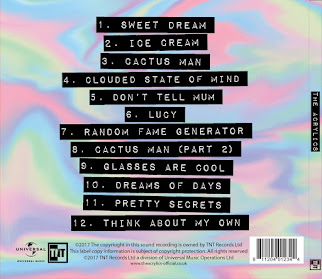
Our chosen track is “Sweet Dream” by Black Cat Zoot, from their 2011 album Mutable Transformer Act.
"Sweet Dream" from Mutable Transformer Act by Black Cat Zoot. Click to play
Black Cat Zoot formed in Munich in 2005. They are an indie pop band who, according to their website, play music with "a ludicrous shake of funk, big beat, and everything that rattles, clatters, and rolls." They assert that "everything is Pop!" and want to break the mold of current pop music with their indie stylings. They are a good fit for our target audience as they are an indie pop band appealing to the new generation, with a female lead to boot. Their second and as of writing latest album, Mutable Transformer Act, was issued by the record label Hazelwood Vinyl Plastics in 2011. Written by the band, it is an album that seeks to use elements of post-modernism to blend the old with the new and re-define music, and "Sweet Dream" is the album's 8th song. We think it'll be a great fit for our band because of reasons discussed earlier on this blog, such as in Post 8, as well as its unique style and its 'old and new' themes. The only real downside is we have to work with the song's strong sense of style, and can't really stray to much outside of its atmosphere like we could with simpler songs- however, it suits our band's aesthetic and so this hopefully won't be a problem.
The logo for Black Cat Zoot's current (as of writing) record label, Hazelwood Vinyl Plastics.
The whole album is free to download from the band's website.
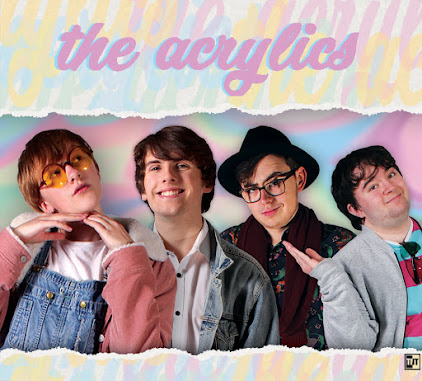
Our indie pop artist is a band called The Acrylics, made up of lead singer Casey Tyler, her brother Hugh Tyler on guitar, and their close friends Guy Chapman and Terence Kitchener on drums and keyboard respectively. Casey is the most important member of the band, being the lead singer and "face" of the group, and thus she has the biggest public-facing personality. She is a young woman, university age, and while she has had some boyfriends in the past, she recently came out as a lesbian, and thus is a staunch supporter of LGBT causes. She is upbeat and quirky, and has a good relationship with all the other band members, and loves performing with them all. However, her best relationship is with her brother Hugh, who is a similar age. He is a bit more mature than Casey, and generally acts a bit "cooler," but he still loves to mess around with his sister and bandmates while performing, and is a good showman. Guy Chapman is a childhood friend of the siblings, who is often considered the cheeky one (although Casey still has a generally bigger personality when it comes to this,) but while performing he is quieter and he likes to get lost in the music. Terence is the oldest and most mature of the band, and considers himself "too cool for school," but nevertheless he still enjoys performing with his bandmates. The band as a whole generally subscribes to the conventional hipster indie style, albeit with an emphasis on pastel colours- while pastel colours are also conventional, they are sometimes dropped in favour of brighter or more subdued colours. They try to look stylish while remaining informal, by using formal clothes such as jackets and shirts and wearing them casually, and they often wear matching clothes. Hats, skirts, jewellery, and quite a lot of denim are some more of their preferred fashion choices. This casual yet smart design aesthetic also extend to their performance and poses for promo shots and so on- they like to pose dramatically and perform quirky gestures to show off their fashion and style, but in a less serious and formal manner than some artists.
As mentioned previously on this blog, Echosmith has been an inspiration. They have the same line-up as our band in terms of gender and number, and a very similar style of casually wearing smart or formal clothing, often with pastel colours as opposed to very bright ones. The lead singer, Sydney, particularly inspired us as she is the face of the band with the biggest personality and most prominent position in the band's videos and promotional images. Click to enlarge.
A promotional shot of the band Sheppard. They are another indie pop band who influenced our band, as they share the bright pastel colour scheme and interesting clothing, including denim jackets, hats, patterned clothes, hats, and more. They also influenced our band's personalities- as you can see, they are all very friendly and have good chemistry, playfully leaning into the camera while they laugh and put their arms around one another. Click to enlarge.
Paperdoll, another influential band with a similar line-up to our band. They have a similar clothing style to what we are planning, and a similar but slightly more subdued colour scheme. We like how they look cool but casual, with the lead singer putting her arm behind her back, and one of the guitarists putting his thumb in his pocket, and we seek to emulate this to some degree. Click to enlarge.
When planning and constructing our band, we also looked to media theory to help us. The ideas of David Gauntlett were of particular help- as our audience research and knowledge of audience theory pointed us towards creating a relatable and aspirational lead singer, to help gratify our target audience, we decided to look at his ideas on role models and identity. He says identity is fluid, and role models serve as navigation points to guide people in steering their ever-changing identity. Casey herself has a fluid personality, as more and more about her is revealed as you watch the video, see her on the website, and read her social media. She provides a role model for our target audience, many of whom are in their teens- they see a successful female fighting for LGBT rights, and thus she creates aspiration, especially amongst female and LGBT audience members. Following this same route, we looked at Richard Dyer's 'star' theory. It claims there is a difference between a performer and a star, in that the star has a public-facing image constructed through what is essentially a marketing campaign with them at the centre. All of Casey's clothing, gestures, social media posts and so on build her up as a star as well as a role model. People agree with her ideals and opinions and thus like her more. Her real personality becomes larger than life through all this, and makes people want to buy the products associated with her as well as simply aspire to be like her- this allows the label to sell music and merchandise through her, which is necessary for our band to be successful. Overall we have planned the band with Casey as the figurehead, with an associated aesthetic, set of ideals, and so on tailored to the target audience, that all make the target audience like them more.
Our record label is TNT Records, a sister company to Harvest Records in that it is also part of the Capitol Music Group, owned by the Universal Music Group. We like how Harvest Records operated, in that it is a UK label focused on a small subsection of the music world, mainly indie and progressive rock artists. Capitol Music Group has many other record labels working under it, all focusing on different areas while benefitting from being part of an umbrella label owned by a larger corporation. By being like Harvest, TNT Records can support indie artists yet still allow them to break into the mainstream through their connections. However, whereas Harvest focused on indie rock while representing only a few indie pop artists, TNT will focus solely on indie pop artists and may represent a few indie rock artists, and/or other indie subgenre artists.
The logo we created for our record label, TNT Records. It is so named because we are following the convention of short and catchy label names, like Harvest, Wichita, and 4AD, and because the label represents explosive and fun indie pop artists. Click to enlarge.